Advertisement
Advertisement
July 2014 Supplement
Sponsored by Endologix
PEVAR in a Single Vascular Surgery Practice
Physician perspectives on the evolving standard of care.
With Stuart Harlin, MD; Christopher LeCroy, MD; Fernando Kafie, MD; and Huey McDaniel, MD, FACS
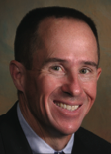
Stuart Harlin, MD, is with the Coastal Vascular and Interventional Center in Pensacola, Florida. He stated that he has no financial interests related to this article.
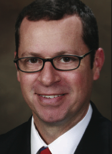
Christopher LeCroy, MD, is with the Coastal Vascular and Interventional Center in Pensacola, Florida. He has disclosed that he is on the speakers bureau and is a trainer for Endologix.
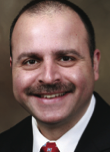
Fernando Kafie, MD, is with the Coastal Vascular and Interventional Center in Pensacola, Florida. He stated that he has no financial interests related to this article.
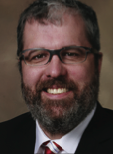
Huey McDaniel, MD, FACS, is with the Coastal Vascular and Interventional Center in Pensacola, Florida. He disclosed that he has received consulting, received speaking honoraria, and has proctored for Avinger, Bard, Endologix, W.L. Gore, Medtronic, NMTC, and Terumo. He has also disclosed that he does not own stock in any of the previously mentioned companies and does not own a health care business.
Centrally located in Pensacola, Florida, Coastal Vascular and Interventional Center serves 11 diverse communities along the Gulf Coast of Florida and Alabama. The group is composed of eight board-certified vascular surgeons and interventional radiologists and offers a broad range of treatments from vein radiofrequency ablation to complex endovascular treatment for aortic disorders.
The practice’s physicians participate in major clinical trials, train vascular specialists regionally and nationally, and are committed to clinical research. Yet, when it comes to their adoption of percutaneous endovascular aneurysm repair (PEVAR), the individual trajectories of these physicians are as diverse as their backgrounds. We spoke with them about their practice, PEVAR, and the future of this minimally invasive treatment for abdominal aortic aneurysms (AAAs).
Coastal Vascular is a pretty unusual practice. Can you tell us more about who you are and what you do differently?
Dr. Kafie: When I was coming out of training at UCLA, there were no private practice groups that were 100% vascular surgery; it was simply not available. Either you created it, or it was not available. This is what we did in Pensacola. We started it with some great doctors from all over the country. It took us 15 years to build this community of eight board-certified minimally invasive vascular specialists. Another unique aspect of our practice is that we do not have academic centers here to refer a patient.
Dr. Harlin: We are the academic center.
Tell us more about your introduction to PEVAR. When did it happen, and how did it occur?
Dr. Harlin: I did my first PEVAR procedure in 2000, jumping on that bandwagon pretty early. During the next several years, I did some cases percutaneously with largely favorable results. Over the years, I started to do more PEVAR cases, to the point that now it is the majority of what I do.
Dr. McDaniel: Endovascular repair of AAAs was a great advancement for vascular surgery, and going percutaneously was an even greater leap. In the state where I was practicing, many patients are fairly obese, making an incision in the groin a large undertaking. We started going percutaneous in the early 2000s, but when the folks from the University of Florida started doing it, they were excluding those obese patients. I then had an opportunity to participate in Endologix’s PEVAR trial and to proctor their PEVAR training courses.
Dr. LeCroy: I came out of a very conservative training program that favored open femoral exposure almost exclusively. They did PEVAR, but only in a select group of patients. I was not really percutaneously oriented when I started to practice, and I stayed that way for a good while. But I had seen enough lymphocele from groin incisions and enough overweight patients with wound breakdown. So, as technology improved with smaller sheaths and Prolene sutures, and the clinical data started to emerge, I started to go percutaneous, and it took off like wildfire. You obviously need to consider patient selection, but it is applicable to a very large percentage of our aneurysm patients. Since I switched, I see almost no groin complications from percutaneous access, and when my patients come back, we can hardly see the access site, and there have been very few complications. My patients are happy.
Dr. Kafie: I have to admit, I was very leery of starting PEVAR. I also came from a very conservative program and liked to close the artery with an interrupted suture and made sure there was absolutely no bleeding. In fact, with one of the percutaneous cases I did with Dr. McDaniel, even though the artery was not bleeding, I had to open it to make sure it was not bleeding; I saw two beautiful sutures doing exactly what they are supposed to do. I was extremely impressed.
What was the biggest barrier to switching to the percutaneous approach: the idea of losing control of the vessel or the reputation of devices failing?
Dr. Kafie: Both. Opening a large hole in the artery, then getting used to closing it with an uninterrupted suture without narrowing the vessel and ensuring that there is no bleeding, as well as the history of closure device failures, made it a challenge. The two most painful procedures that we perform are AAA open repair and fixing somebody else’s failed closure. That’s personally painful because you are dealing with uncontrolled bleeding.
Dr. Kafie, what pushed you over that edge toward a percutaneous approach?
Dr. Kafie: Peer pressure. When a patient came in and said, “Dr. Harlin does it percutaneously, why can’t you?” I said, “ . . . time for me to learn.”
How do the patients know about this approach?
Dr. Kafie: The Internet. And veterans will go to their Lions Club or Rotary Club meetings and compare their incisions. Here’s Kafie’s, here’s Dr. LeCroy’s—bigger is not always better.
How do you go about training and introducing the percutaneous technique in your practice?
Dr. McDaniel: My observation is that you have to commit to minimally invasive procedures as a part of what you do. You have to do iliac stents, endarterectomies of the lower extremities, you need to use preclosure in other settings and arteriography of the legs. Once you become comfortable with these procedures, you should go to the Endologix PEVAR training program and get hands-on experience with the device.
Dr. LeCroy: For those who do a lot of percutaneous interventions, it is not a great leap, but you need the right skill set. We have years of experience of feeling, clamping, and working on femoral vessels, so we can usually tell by looking at the preoperative CT if it is going to clamp and if the anterior wall of the vessel will take a closure device. There are plenty of people who use closure devices and do not have a tactile experience working with vessels, and they are great endovascular doctors, but they do not have the other side of it, that open experience, correlating the image on CT to what it actually feels like. This is what we have to do every day—triage patients if we can safely perform percutaneous access, or someone will have to open them up.
Dr. McDaniel: In my experience, problems with the percutaneous approach always happen with smaller sheaths. It is a different closure technology, and I think people sort of take it for granted. I am a huge fan of the Endologix device because it is uniquely designed for a totally percutaneous approach. I think Endologix got it right when they went with an anatomically fixated endograft, simply because you still have the option of working below the inguinal ligament from the contralateral groin, and if you have a problem, you can go back over the bifurcation and treat it. If you have stenosis, which happens once out of every 20 times, you can employ angioplasty, and hopefully resolve it without stenting most of the time. If you have a high stick, you can introduce a covered stent if you do not want to cut down on the groin. With an anatomic fixation endograft, you have options that you might not otherwise have when using a traditional main body, long leg/short leg endograft.
Dr. LeCroy: If you have a bleeding failure, you can add another closure device, typically in a different plane, and if that does not work, do the cutdown, and repair the artery. It adds 10 minutes to the procedure, there is almost no blood loss, and by one of those means, we leave an operating room with hemostasis every time.
Dr. Harlin: The percutaneous certification courses offered by Endologix are certainly very good. Dr. LeCroy and I went to one just to be able to say that we have gone through the formal training. We had performed quite a number of cases percutaneously prior to the course, but we certainly saw other things and came up with other ideas that we had missed before, so that was kind of cool.
What specifically did you come up with that you had not seen?
Dr. Harlin: Just little differences in technique about the angulations, the overlaps, and specifically the third suture stuff. You also learn how others had made mistakes before. As you talk to the faculty and other physicians in the course, you hear, “Remember how we did X, Y, Z?”—a complication you had not previously thought about.
As you look at yourself as a practice, with all of your experience, what percentage of patients are accessed percutaneously versus with cutdown?
Group: 80% percutaneous, higher for Dr. McDaniel.
How do hospitals react to the idea of PEVAR?
Dr. Harlin: The devices in percutaneous cases cost more, no doubt about that. The hospitals would certainly prefer if we did cutdowns. But, we have myriad marketing strategies: TV shows, a website, testimonials. We, as a practice, are dedicated to demonstrating the value of PEVAR and educating the patients and administration that we have superior outcomes compared to others who do the same procedures. Our group is one of the only private practices in this part of the world that is part of the Society for Vascular Surgery’s Vascular Quality Initiative. We did this simply to demonstrate our superior outcomes and commitment to transparency of how our patients do in comparison, not only regionally but also nationally.
What components of the Vascular Quality Initiative specifically reflect your preference for the percutaneous approach?
Dr. Harlin: The immediate factor is the length of stay. Everyone goes home the next day. When you’re averaging a length of stay between 1 and 2 days and observe a 50% decrease, it is an immediate, easily demonstrable thing. The patient satisfaction score is usually higher, plus readmission for infection and the rate of other complications are also better.
Where do you see your practice and the entire movement of minimally invasive EVAR going in the coming years?
Dr. Harlin: Is it going to be 100% percutaneous? The answer is no, for several reasons. There will always be patients with challenging arteries or other reasons that you cannot achieve access via their groins. However, percutaneous access will be a progressive majority. I know it is hugely controversial, but in our opinion, the next step is outpatient EVAR. There have been three peer-reviewed articles on same-day discharge in the inpatient setting. We did a small study through the institutional review board on EVAR in the office-based lab with surgical backup.
Patients are going to demand it, and insurers are going to demand it for cost containment. There are patients whom you will always have to treat in hospitals, especially for snorkels, renals, etc.; technology manifests itself that way. When I was a general surgery resident, every hernia repair was inpatient, and now there is no inpatient code for hernia repair. In our study, we were trying to mitigate every contingency as far as, “If this happens, what are you going to do in order to have enough safeguards?” Robust data from other trials will be required to predict who is likely to fail based on body mass index, skin height to arterial depth, etc., and the answer is nowhere close to being known. It will take a long time to become accepted by the majority.
Would anyone like to share any parting thoughts?
Dr. LeCroy: It has long been accepted that EVAR is a treatment of choice for AAA repair. We are now living in an era when percutaneous access is going to be accepted as a standard approach, understanding that there are some open cases out there that will require femoral exposures and open repairs. In a zeal to do everything percutaneously, we should not lose sight of the reasons that we are successful at it, as a group practice and as a larger community of vascular surgery. All of the baseline experience with arterial surgery and all of the endovascular techniques we have learned is what makes a vascular surgeon uniquely qualified for PEVAR. The next frontier is outpatient EVAR.
Dr. Harlin: We have been implanting Endologix endografts for 6 years now. The quality of the relationship we have established, the flexibility, competency, and resources that company has extended to us have been absolutely central to what we have been able to accomplish and has made a fundamental difference in our practice.
Advertisement
Advertisement