Advertisement
Advertisement
December 2023 Supplement
Sponsored By Surmodics, Inc.
CASE REPORT
Successful Removal of Chronic Thromboembolic Debris Using the Pounce™ Thrombectomy System
Patient Presentation
A 69-year-old patient with a history of metastatic lung cancer and mitral valve vegetations had presented previously to the hospital with acute left lower extremity ischemia. At that time, the patient was found to have a nearly complete left common iliac artery occlusion on a CTA, whereupon the physicians attempted pharmacomechanical thrombectomy. There was subsequent embolization, which was treated with aspiration thrombectomy and a short course of antiplatelet medication (Brilinta®, AstraZeneca). Unfortunately, 6 days after this first intervention, the distal popliteal artery reoccluded, and the patient presented back to the hospital.
Diagnostic Findings
The right common femoral artery was accessed using ultrasound access, and a 5 Fr X 11 cm vascular sheath was placed in the access site. A .035 Bentson guidewire was placed through the sheath and a 5 Fr Accu-Vu Omni™ Flush catheter (AngioDynamics, Inc.) was then placed and used to help navigate the Bentson wire to the left distal external iliac artery, where an initial angiogram was taken. The angiogram showed patent left common femoral, superficial femoral, and proximal left popliteal arteries with abrupt occlusion of the mid left popliteal artery at the knee joint (Figure 1) with distal reconstitution of flow at the origin of the posterior tibial and peroneal arteries.
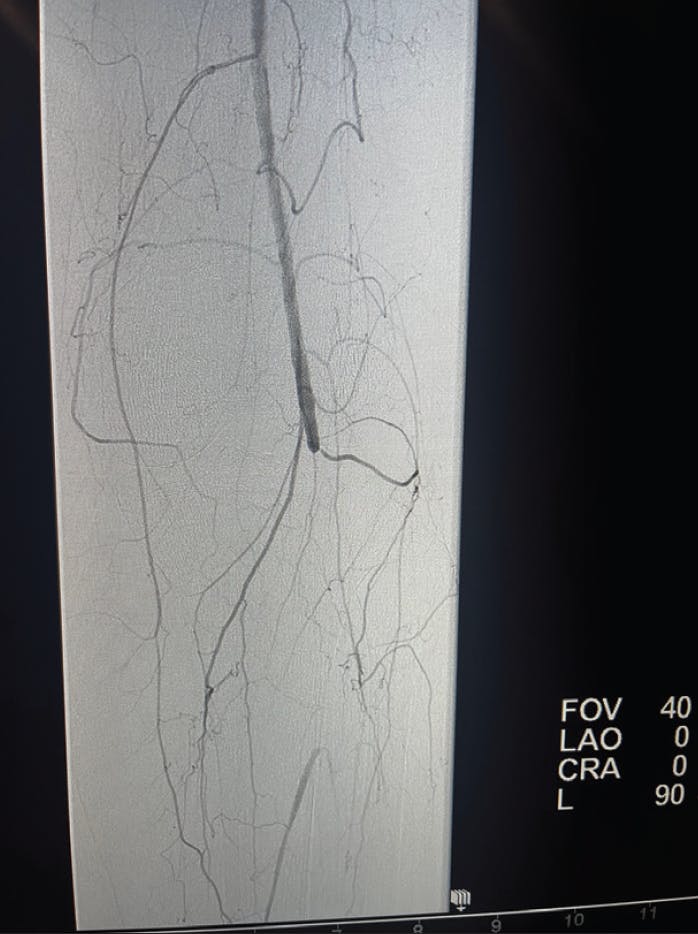
Figure 1. Initial angiogram demonstrating distal popliteal artery occlusion.
Treatment
The Bentson wire was placed in the superficial femoral artery (SFA) and the 5 Fr vascular sheath was exchanged for a 7 Fr sheath, which was positioned at the origin of the SFA. The Bentson wire was swapped for a Glidewire Advantage® guidewire (Terumo Interventional Systems), the popliteal artery occlusion was crossed, and the guidewire was advanced to the mid peroneal artery. The Pounce™ Thrombectomy System was prepped, and the basket wire was delivered to the proximal peroneal artery. The funnel catheter was advanced over the proximal end of the basket wire to the proximal popliteal artery. Under direct fluoroscopy guidance, the baskets were retrieved back into the funnel, the basket wire was locked to the funnel catheter, and the whole system was removed from the vasculature, successfully removing chronic thromboembolic debris (Figure 2). The 7 Fr sheath was aspirated, and a post-thrombectomy angiogram was taken, showing slightly improved flow with residual thrombus in the distal popliteal artery and tibioperoneal trunk (TPT). An additional two passes were made in the distal popliteal artery and TPT, respectively. After a third pass, a follow-up angiogram showed a patent left SFA, popliteal artery, and TPT, with two-vessel runoff to the foot via the posterior tibial and peroneal arteries (Figure 3).
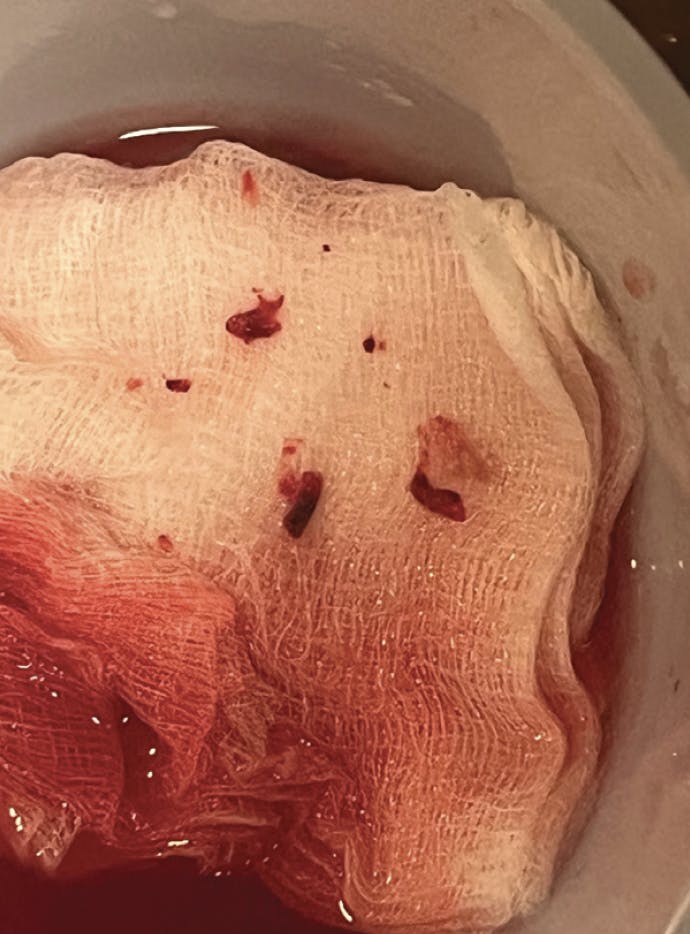
Figure 2. Clot removed during the Pounce™ System passes. Used with permission from the author.
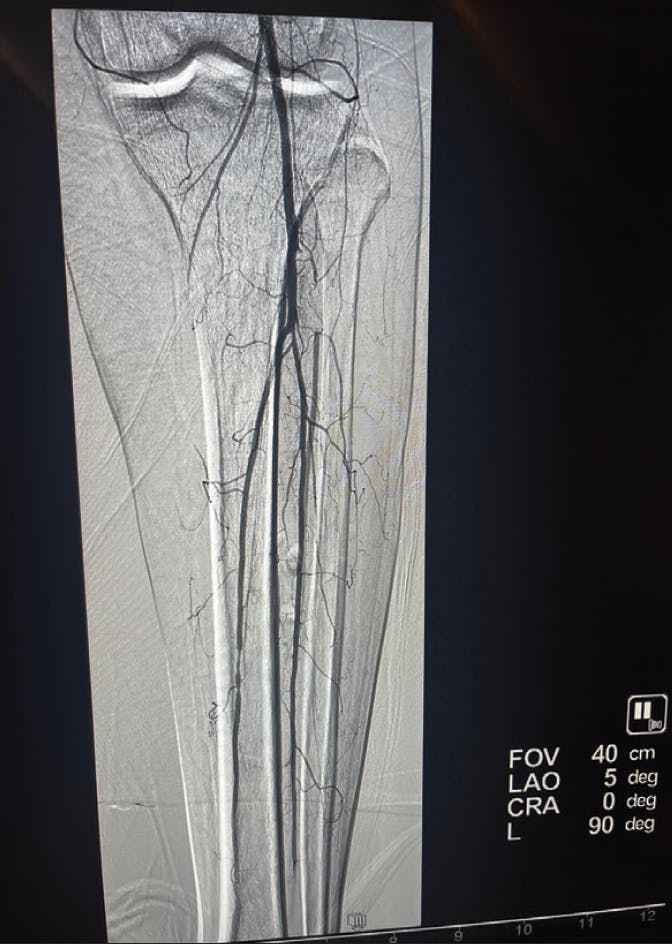
Figure 3. Angiogram after use of Pounce™ System showing patent popliteal and infrapopliteal vessels.
Post-Procedure Outcome
The patient remained in the hospital after the procedure and was discharged with a medication plan, with follow-up scheduled 3 months post-intervention for reevaluation. The Pounce™ Thrombectomy System provided successful mechanical thrombectomy of the occluded segment with restoration of in-line flow without requiring further thrombolysis or surgical intervention.
Caution: Federal (US) law restricts the Pounce™ Thrombectomy System to sale by or on the order of a physician. Please refer to the product’s Instructions for Use for indications, contraindications, warnings, and precautions. SURMODICS, POUNCE, and SURMODICS and POUNCE logos are trademarks of Surmodics, Inc. and/or its affiliates. Third-party trademarks are the property of their respective owners.

Advertisement
Advertisement