Advertisement
Advertisement
December 2023 Supplement
Sponsored By Surmodics, Inc.
CASE REPORT
Successful Treatment of Infrapopliteal Thromboembolic Arterial Occlusion With the Pounce™ Thrombectomy System
Patient Presentation
A 75-year-old man presented to the hospital with pain and paresthesia of his right foot. Symptoms started 1 day prior to his arrival at the hospital. Evaluation in the emergency department led to the diagnosis of new-onset atrial fibrillation with evidence of thromboembolism to the right lower extremity by duplex ultrasonography. He was immediately started on metoprolol, aspirin, and heparin and was brought to the cath lab for angiography.
Diagnostic Findings
Micropuncture access was achieved at the right common femoral artery, and a 5 Fr diagnostic sheath and a V-18™ ControlWire™ guidewire (Boston Scientific Corporation) were placed ipsilateral down the right leg. The initial angiogram showed a 100% thrombotic occlusion of multiple below-the-knee vessels, including the right popliteal artery at the P1 segment, the right tibioperoneal trunk (TPT) with reconstitution via the proximal collaterals, the right proximal posterior tibial (PT) artery with visible reconstitution further down the vessel, the right peroneal artery, and the right anterior tibial (AT) artery (Figure 1). The plan was to remove visible thrombus and revascularize the below-the-knee vessels utilizing a thrombectomy and balloon angioplasty combination strategy.
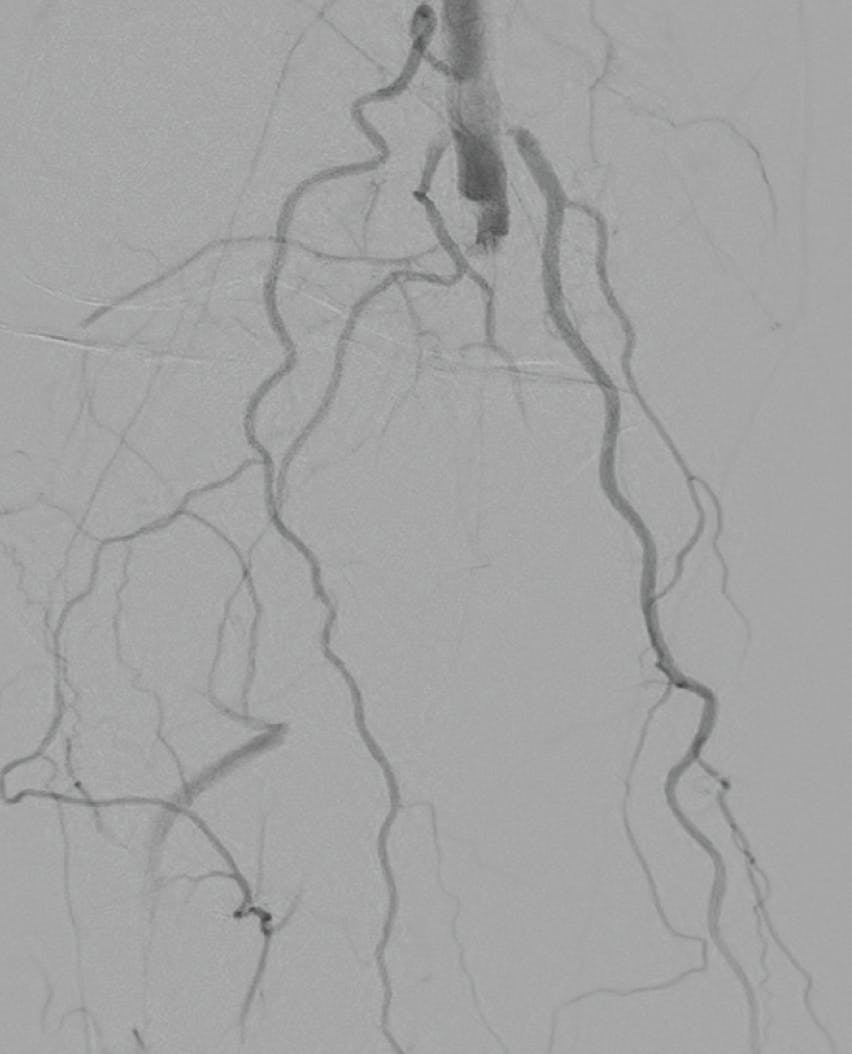
Figure 1. Preprocedure angiogram showing 100% thrombotic occlusion of popliteal, TPT, peroneal, PT, and AT arteries.
Treatment
The 5 Fr diagnostic sheath was exchanged for a 7 Fr, 45 cm Pinnacle® Destination® guiding sheath (Terumo Interventional Systems). A .035 TrailBlazer™ support catheter (Medtronic) was advanced over the wire to the right peroneal artery under fluoroscopy. The Pounce™ Thrombectomy System was prepared. To start, the baskets were deployed mid AT, the funnel catheter was deployed over the basket wire, and the funnel was parked in the proximal AT.
After pullback of the basket wire into the funnel, the system was externalized through the 7 Fr sheath, cleaned, and then reinserted for a second pass. For the second pass, the basket wire was placed in the proximal PT, and the funnel was deployed in the proximal popliteal artery. After successful basket wire retraction through the PT and into the funnel, the system was removed through the 7 Fr sheath and cleaned once again. A 3.5 X 3.0 mm tapered PTA balloon was used in the PT to clean up some residual stenosis. After the PTA balloon was removed, the Pounce™ Thrombectomy System was deployed again for a third pass in the peroneal artery.
The basket wire was placed in the proximal peroneal artery, and the funnel was placed in the proximal popliteal artery. The baskets were successfully retracted back into the funnel, removing the thrombus. The Pounce™ System was externalized through the 7 Fr sheath. All three passes resulted in successful flow restoration and complete thrombus removal (Figure 2) from all three below-the-knee vessels (Figure 3).
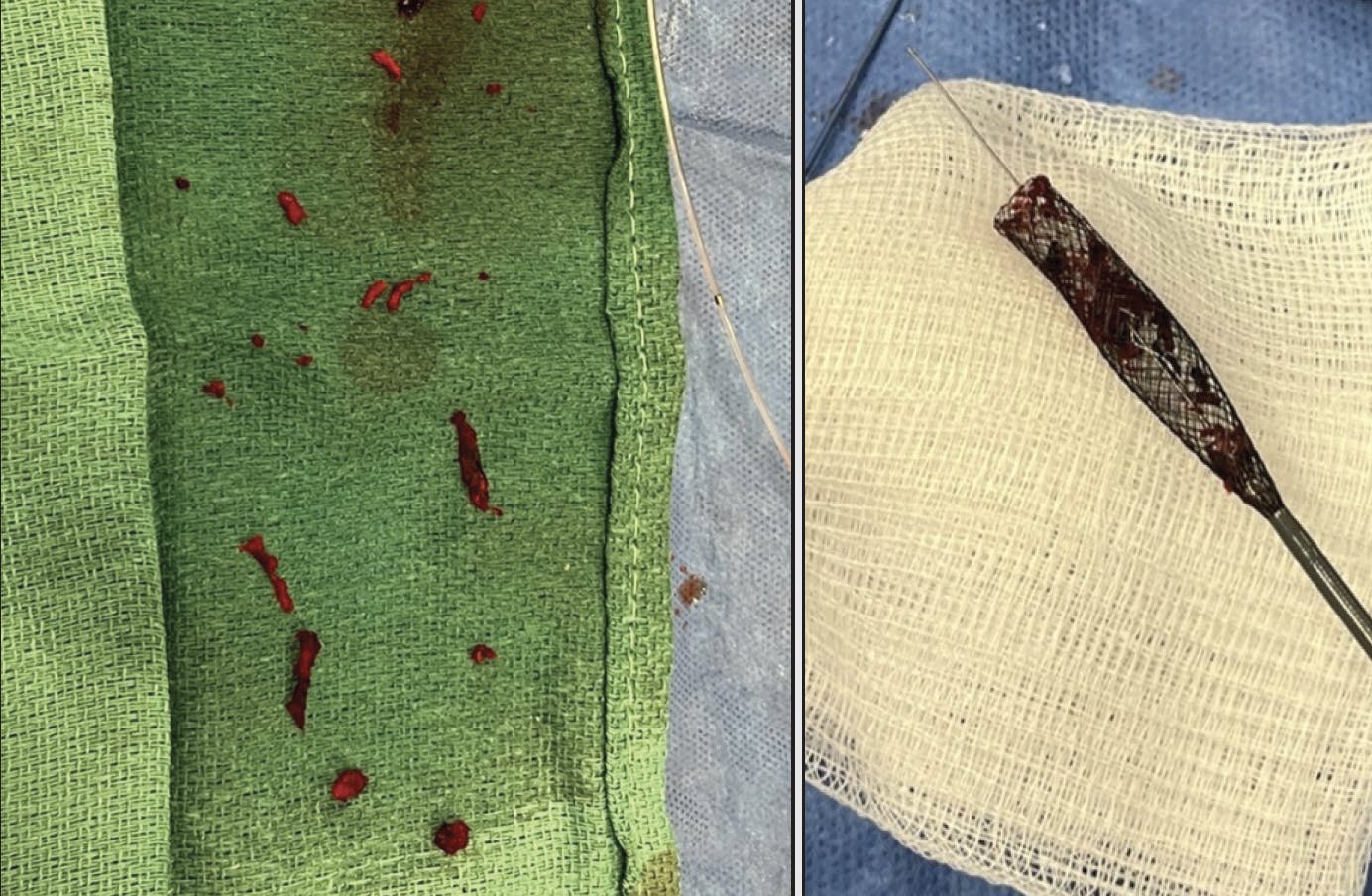
Figure 2. Thrombus removed after multiple passes with the Pounce™ Thrombectomy System.
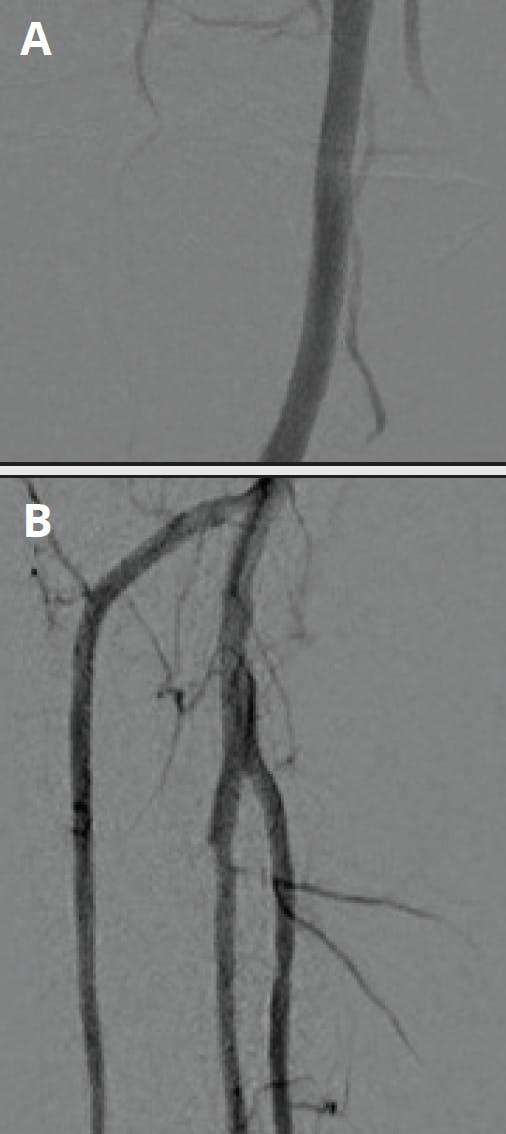
Figure 3. Patent popliteal (A), TPT, and tibial (B) arteries after Pounce™ Thrombectomy System passes.
Conclusion
The patient was monitored for 2 days post-procedure and discharged once the atrial fibrillation was controlled. The patient was put on Xarelto® (Janssen) for the atrial fibrillation diagnosis. Post-procedure ankle-brachial index was 1.1 on the right-side foot with normal Doppler velocities.
The Pounce™ System allows for rapid resolution of thrombotic debris. In this case example of a patient suffering from an acute thromboembolic event related to atrial fibrillation, restoration of inline flow of the infrapopliteal vessels was quickly achieved without the need for thrombolysis or open surgical intervention. In appropriately sized tibioperoneal vessels, the Pounce™ System can be used safely and efficiently for direct endovascular intervention.
Caution: Federal (US) law restricts the Pounce™ Thrombectomy System to sale by or on the order of a physician. Please refer to the product’s Instructions for Use for indications, contraindications, warnings, and precautions. SURMODICS, POUNCE, and SURMODICS and POUNCE logos are trademarks of Surmodics, Inc. and/or its affiliates. Third-party trademarks are the property of their respective owners.
Advertisement
Advertisement