Advertisement
Advertisement
October 2026 Supplement
Sponsored by Medtronic
Generating Real-World Evidence: The Case-Specific Health Care Professional (HCP) Clinical Survey of the Liberant™ Thrombectomy System
The management of patients with venous and arterial thrombosis has changed dramatically in recent years. There has been continuous evolution away from systemic or intra-arterial/intravenous thrombolytic therapy toward mechanical thrombectomy devices that offer the possibility of same-day procedures. As these devices continue to evolve, there is a strong need for clinical evidence confirming their safety and effectiveness. Although prospective, multicenter, randomized trials are always desirable, newer study designs are being explored to more rapidly capture outcome data in this fast-moving space. The Liberant™ thrombectomy system (Medtronic) obtained FDA clearance in June 2025 and has since been used in hundreds of patient cases. A clinical assessment was designed as an early evidence generation effort to systematically characterize real-world physician experience with the Liberant system.
OBJECTIVE
The purpose of the Case-Specific Health Care Professional (HCP) Clinical Survey of the Liberant Thrombectomy System (NCT07335341), also known as the Liberant Clinical Assessment, is to collect first-in-human clinical data to confirm the safety and performance of the Liberant thrombectomy system when used for the removal of fresh, soft emboli or thrombi from the vessels of the peripheral arterial and venous systems.
CLINICAL ASSESSMENT DESIGN
The Liberant Clinical Assessment is a multicenter, prospective, real-world survey that collects periprocedural data for thrombectomy procedures performed within arterial, venous, or arteriovenous fistula vessel beds. Data will be entered for at least 50 cases over an approximate data collection period of 8 months. At least 10 HCPs will participate in this assessment. This survey population will consist of vascular interventionalists who perform a high volume of thrombectomy procedures in their clinical practices and have used the Liberant system. The participating HCPs will document their individual case experience following routine utilization of Liberant, with or without the Excipio™* thrombectomy device (Contego Medical), in accordance with the approved device labeling within 72 hours of device use. Each survey response will be based on physician recollection, and there are no patient follow-ups. The responses will be aggregated by a third-party vendor.
DEVICE DESCRIPTION
The Liberant system is designed and indicated to restore blood flow in vessels and arteries by removing fresh, soft emboli or thrombi from the vessels of peripheral arterial and venous systems (Figure 1). The system is composed of the device catheters (Figure 2), dilator, clotbuster, hemostasis valve, aspiration tubing, Liberant blood conservation unit (BCU) with two modes (standard and booster) (Figure 1F), and the Riptide™ aspiration system pump (Medtronic) and collection canister (Figure 1D).
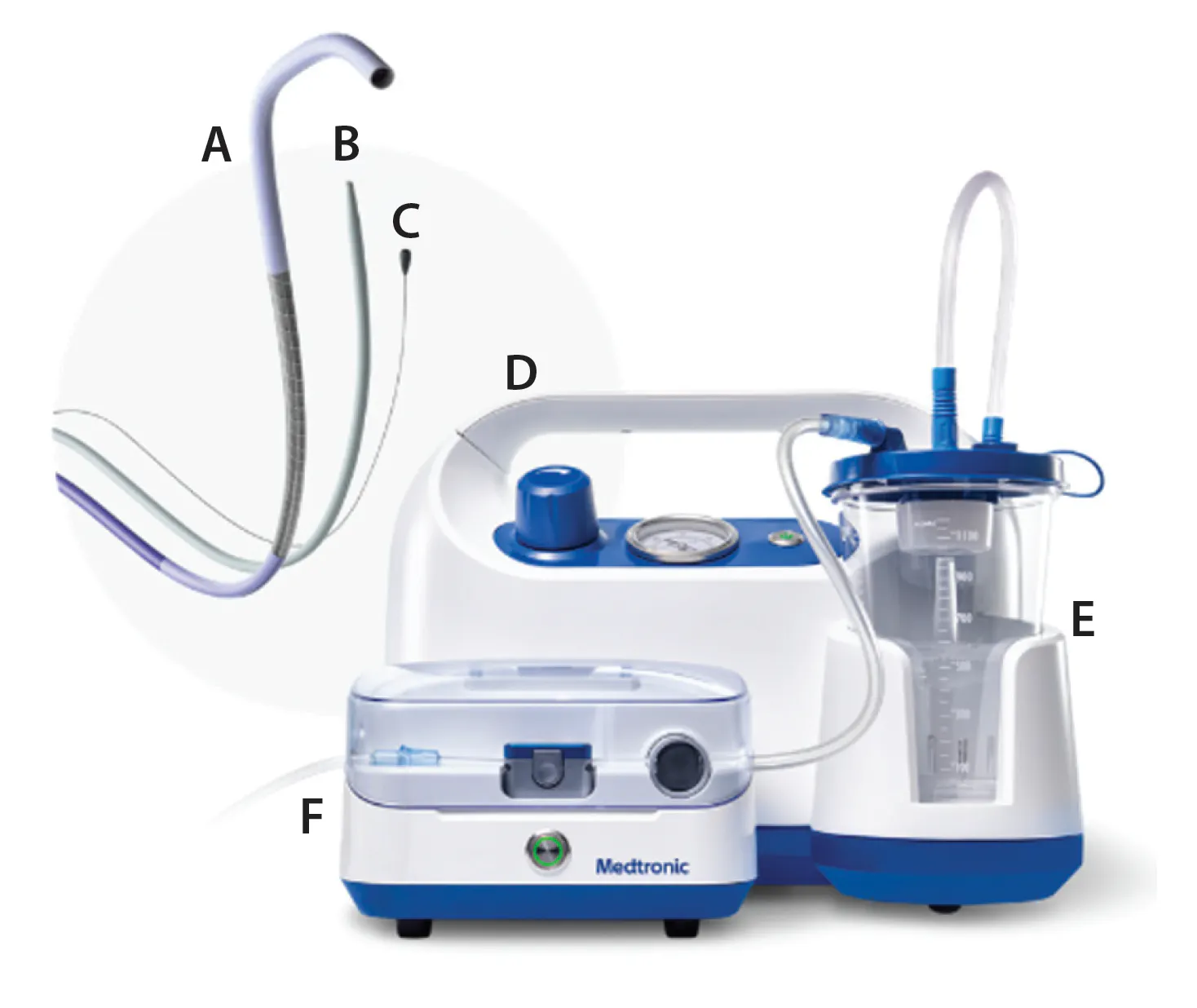
Figure 1. Liberant thrombectomy system and capital components: 12-Fr catheter (A), dilator (B), clotbuster (C), Riptide aspiration pump (D), canister (E), and blood conservation unit (F).
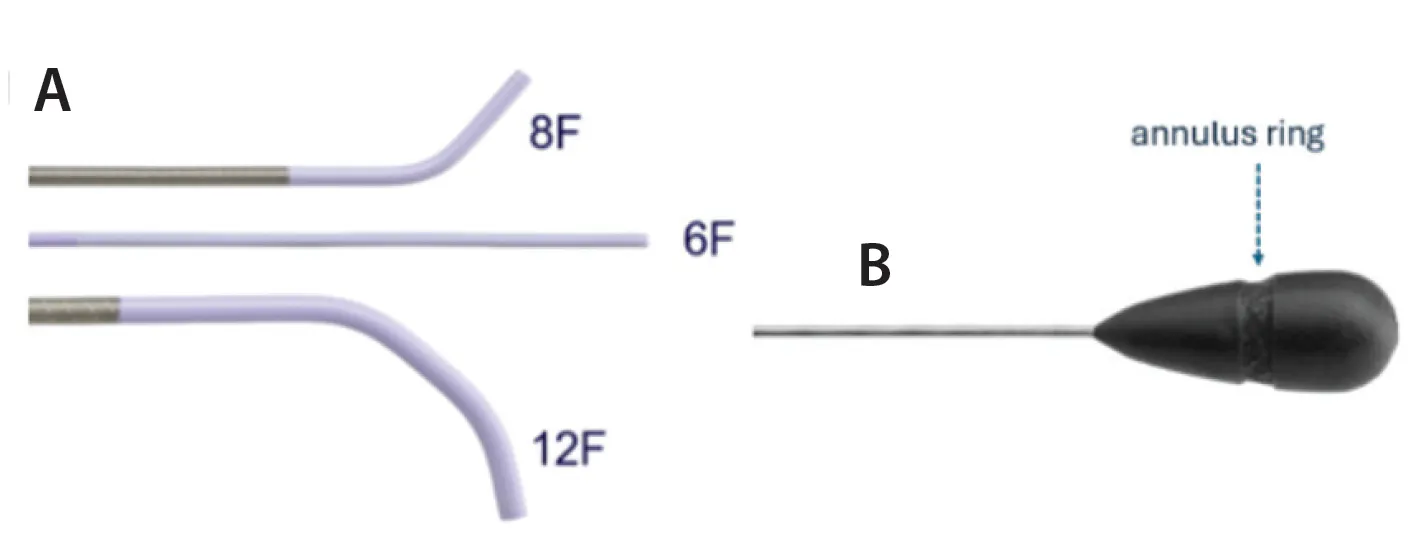
Figure 2. Liberant thrombectomy system catheters. Liberant system catheter tip shapes: straight (6 Fr); single-angled (8 Fr); and double-angled (12 Fr) (A). Liberant system clotbuster bulb (B).
ENDPOINTS
Primary Outcomes
The primary safety endpoint of this assessment is the physician-reported rate of device-related serious adverse events (SAEs) during the index procedure (Figure 3). SAEs are defined as any event leading to death, life-threatening illness or injury, permanent impairment, prolonged hospitalization, or unplanned or additional medical or surgical interventions to prevent serious harm.
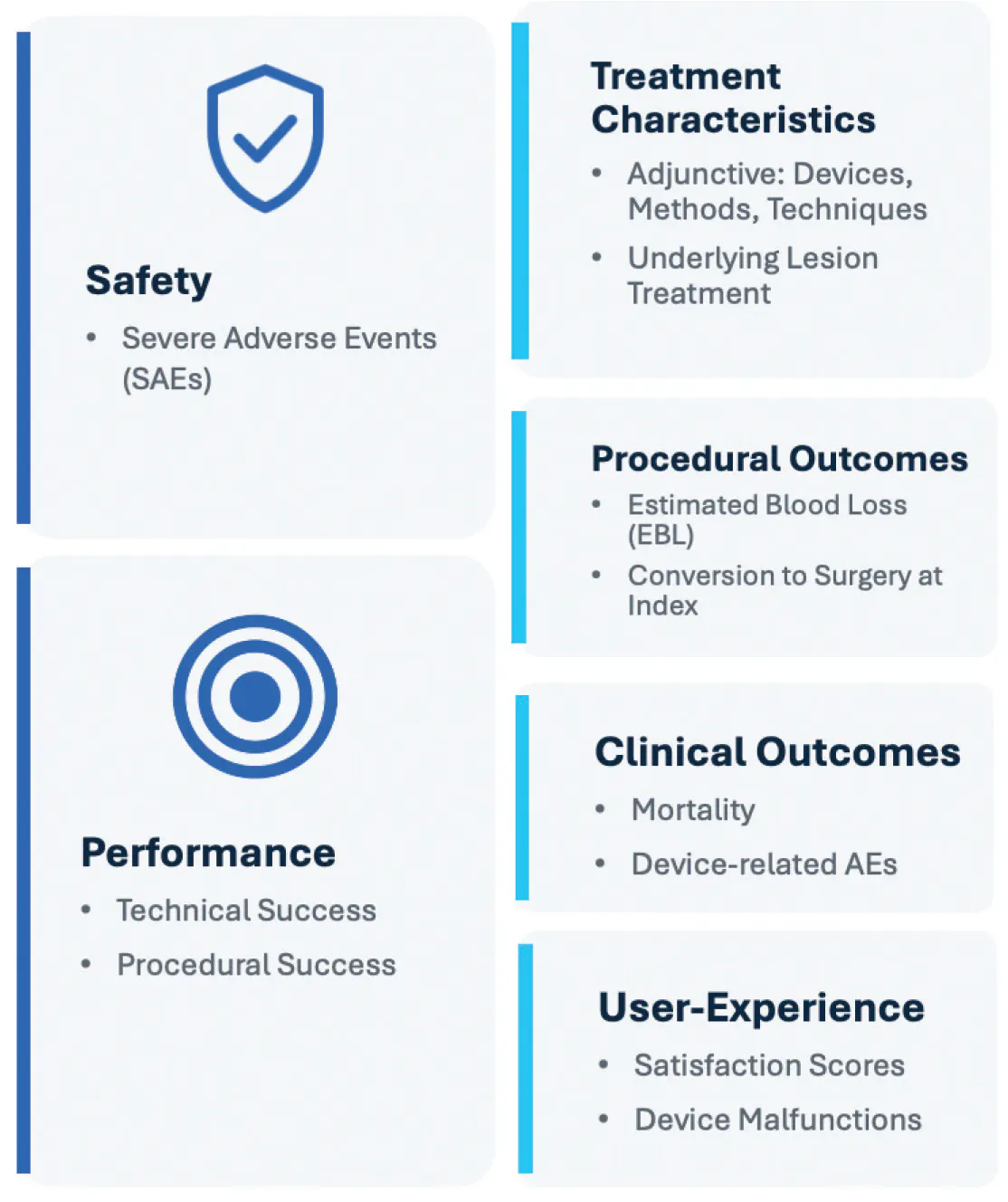
Figure 3. Clinical Assessment endpoints.
The primary performance endpoints are technical and procedural success during the index procedure (Figure 3). Technical success is defined as a successful introduction of the catheter into peripheral vasculature; delivery of the Liberant system to the target location; aspiration of the soft, fresh embolus or thrombus; and retrieval of the system during the index procedure. Procedural success is defined as successful removal of the soft, fresh, embolus or thrombus and restoration of adequate blood flow to the vessels following completion of the index procedure, inclusive of all endovascular therapies used in the index procedure (eg, percutaneous transluminal angioplasty, atherectomy, stents).
Ancillary Outcomes
The ancillary endpoints will characterize procedural, clinical user experience, and device performance outcomes (Figure 3). Procedural measures will include a qualitative assessment of any adjunctive therapies used in the index procedure, including the use of other thrombectomy devices and any additional treatment of the underlying lesions. Other endpoints include procedural outcomes, such as the estimated blood loss and rate of conversion to open surgery. Clinical outcomes will include all-cause periprocedural mortality and device-related adverse events. User experience will be recorded as satisfaction scores on a 1 to 5 scale. Device performance will be evaluated through any reported device deficiencies, reliability or usability concerns, and device malfunctions. Additional data collected from physician surveys are listed in Table 1.

STATISTICAL PLAN
Sample Size
At least 50 use cases will be recorded from approximately 10 HCPs. No formal statistical sample size estimates were calculated for this quantitative survey. Data collected will be analyzed as quantitative and descriptive statistics, including means, standard deviation, medians, minimum/maximum values, total counts, and percentages. A two-tailed 96% CI will be generated for primary safety and performance endpoints.
SUMMARY
There is a need for clinical data to support use of the Liberant system in this rapidly evolving thrombectomy space. The Case-Specific HCP Clinical Survey of the Liberant Thrombectomy System is a novel approach to gain expeditious, real-world experience with the Liberant system. In addition to traditional safety and efficacy endpoints, data will be collected on physician satisfaction with the system and overall catheter/system performance. The results from the Liberant Clinical Assessment will help guide future research efforts and provide valuable information to physician users regarding techniques in mechanical and aspiration thrombectomy.
Advertisement
Advertisement