Advertisement
Advertisement
October 2026
An Interview With Andres Schanzer, MD, MBA
Dr. Schanzer discusses his approach to leadership, building a multidisciplinary complex aortic center and research program at UMass, advancing F/BEVAR through US-ARC, and his vision for vascular surgery and the Society for Vascular Surgery.
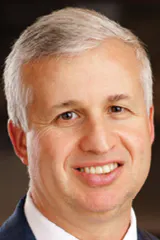
From key director roles at your institution, to founding the US Fenestrated and Branched Aortic Research Consortium (US-ARC), to serving as President-Elect of the Society for Vascular Surgery (SVS), your career demonstrates a commitment to leadership and advancing the field of vascular surgery. What principles make up the foundation of your approach to leadership?
My approach to leadership is grounded in collaboration, team building, and alignment around a shared purpose. Most meaningful problems in medicine have become way too complex to be solved by a single person or specialty. To be effective and impactful, it is important to listen carefully to different perspectives, articulate a clear vision, and create an environment in which people with different expertise can work toward a common goal.
Individual accomplishment is much less important than building teams and systems that let other people succeed. Whether developing a multidisciplinary cardiovascular program, creating a research consortium, or working within the SVS, I try to surround myself with talented people, give them meaningful responsibility, get out of their way, and make sure success is shared. When people understand the mission, feel valued, and have a genuine role in shaping the work, teams accomplish amazing things that no individual could accomplish alone.
You founded the UMass Memorial Center for Complex Aortic Disease. What does the programmatic, multidisciplinary approach you describe look like in practice? How has it enabled you to improve outcomes for high-risk patients with complex aortic disease?
Complex aortic disease is a great example of why a programmatic approach matters. These patients almost always have problems that cross specialty boundaries and may require sophisticated open surgery, endovascular repair, advanced imaging, anesthesia, critical care, and long-term surveillance. The goal of a complex aortic program is to bring those capabilities together around the patient rather than asking the patient to navigate a collection of individual services. We try to streamline that patient experience in every possible way.
At UMass Memorial, we have worked to build that type of integrated environment within the broader Heart and Vascular Center that brings vascular surgery, cardiac surgery, cardiology, cardiovascular anesthesia, imaging, and other disciplines together. That structure allows us to discuss difficult cases collaboratively, select the treatment strategy that is best for the individual patient rather than for a particular specialty, and apply consistent approaches to perioperative care and surveillance.
For high-risk patients, details matter, and there is extremely limited room for errors or fumbles. Outcomes are influenced not only by the technical success of the operation but also by patient selection, preoperative planning, anesthesia, critical care, and longitudinal follow-up. Building a team and a system around all those components has allowed us to take on increasingly complex patients while maintaining a relentless focus on safety and outcomes.
During your time at UMass, you helped establish and grow a robust clinical research program. What was your strategy for building that research infrastructure? What are the essential ingredients to a strong research culture?
When I arrived at UMass, we had an excellent clinical practice but a limited vascular surgery research program. Dr. Louis Messina hired me with a clearly articulated vision to help build the research program. I never viewed the solution as simply trying to publish more papers. The goal was to build infrastructure and a culture in which asking important questions became part of the DNA of the division.
That meant recruiting people who were intellectually curious and uncomfortable accepting the status quo, creating the administrative and research support necessary to execute studies, developing collaborations inside and outside the institution, and making research opportunities available to faculty, residents, fellows, and other members of the team. Over time, that has grown into a program that now includes National Institutes of Health—funded basic scientists, externally funded clinical investigators, physician-sponsored investigational device exemption (IDE) studies, and participation in numerous clinical trials. The culture foundationally transformed to one that asks questions about everything we do and challenges dogma.
The essential ingredients are people, mentorship, infrastructure, collaboration, and protected opportunity. Most importantly, there must be a culture in which research is viewed as part of patient care rather than something separate from it. The best clinical research questions come from the bedside. When clinicians are encouraged to ask why we do something, whether we can do it better, and how we know it works, research becomes a natural extension of caring for patients.
You’re Founding Medical Director of US-ARC, which brought together investigators and data from 10 physician-sponsored IDE programs. What has this collaboration made possible in fenestrated and branched endovascular aortic repair (F/BEVAR) practice? What’s been the biggest patient impact?
US-ARC grew from the recognition that each individual physician-sponsored IDE program was generating extremely valuable information, but that the field would learn much more if those data could be examined collectively. Bringing investigators from 10 programs together created a much larger multicenter cohort and allowed us to study questions that would have been impossible to answer from any single institution. Scientifically, the collaboration gives us greater power to evaluate outcomes, identify predictors of complications, understand durability, and examine how variations in patient anatomy, technique, device design, and perioperative management affect results. Just as importantly, it created a community of investigators who can learn from one another rather than working in isolation. Since 2018 through today, we have met on the first Monday evening of every month and continue to learn so much from each other.
For patients, the greatest impact is that we can move from experience and intuition toward evidence much more quickly. These are extraordinarily complex procedures performed in high-risk patients. The larger and more rigorous our collective experience becomes, the better we can define best practices: who benefits, how to optimize device/procedures, which complications are potentially preventable, and how we should follow these patients over time.
And, what are the major questions you hope to answer next with the data?
The next generation of questions is increasingly about refinement. We know that F/BEVAR can make treatment possible for patients who historically had very limited options. The challenge now is to understand how to make that treatment safer, more durable, and more reproducible.
I am particularly interested in identifying modifiable predictors of major complications, improving strategies to prevent spinal cord ischemia and other adverse events, understanding long-term branch and device durability, and determining how anatomy and patient characteristics should influence treatment selection. Another important area is surveillance: identifying which findings truly predict later problems and how we can tailor follow-up so that it is both rigorous and patient centered.
Ultimately, I believe these data will help us move toward increasingly personalized treatment. Rather than asking simply whether F/BEVAR works, we should be able to tell an individual patient what treatment is most appropriate for their anatomy and risk profile and what outcomes they can reasonably expect. Undoubtedly, all the answers to these questions will involve embracing artificial intelligence (AI). We are just starting now to understand how AI can be leveraged, and the next 10 years will be all about AI deployment and implementation into both research and actual, real-time workflows.
CARPE-CMD, for which you’re Principal Investigator, is evaluating custom-made devices (CMDs) and physician-modified endografts (PMEGs) for complex aortic aneurysm repair. How do you see the roles of these technologies evolving as evidence grows, and what will ultimately determine their broader adoption?
Custom-made, patient-specific devices and PMEGs address an important clinical problem: Many patients with complex abdominal aortic aneurysms (AAAs) are not candidates for conventional endovascular repair, and many are prohibitively high risk for open surgery. I believe that open thoracoabdominal aortic aneurysm (TAAA) repair, even in the best of hands, leaves the majority of patients treated permanently changed. It is arguably the biggest operation, with the most systemic stress, that modern medicine offers. These technologies continue to expand the number of patients for whom a minimally invasive alternative is possible.
I suspect their roles will continue to evolve as the evidence matures and commercially available technology evolves. CMDs offer obvious advantages when there is sufficient time for planning and manufacturing. PMEGs can fill an important need when an appropriate commercial device is not available or when the clinical circumstances do not allow the patient to wait. CMDs will be the standard.
However, broader adoption should be driven by evidence rather than enthusiasm alone. We need rigorous data demonstrating safety, effectiveness, durability, reproducibility, and appropriate patient selection. We also need appropriate training, institutional infrastructure, quality oversight, and long-term surveillance. These are technically demanding procedures, and broader availability should never come at the expense of quality. The ultimate goal is not simply to make these procedures available in more places; it is to make the right treatment available to the right patient with consistently excellent outcomes.
You are interested in ways to measure AAA care beyond traditional measures. How should we ideally be measuring quality in AAA care? In what ways could metrics be used more effectively to improve patient care?
Traditionally, we have measured quality in AAA care using outcomes such as perioperative mortality and major complications. Those outcomes are obviously important, but they represent only one component of high-quality care. Quality begins well before the operation and continues long after the patient leaves the hospital.
Ideally, we should measure the entire episode of care because that is what is important to a patient. That includes whether patients are being appropriately selected for intervention, whether repair is being performed at the appropriate threshold, whether the selected approach is appropriate for the patient’s anatomy and risk, whether evidence-based perioperative practices are being followed, and whether patients receive appropriate long-term surveillance. We should also be looking at durability, reinterventions, functional recovery, and outcomes that matter directly to patients.
Metrics are most useful when they create a feedback loop rather than simply a scorecard. SVS and initiatives such as the Vascular Quality Initiative are particularly well positioned to help define meaningful measures and establish benchmarks that raise the standard of vascular care across the field. My partner, Dr. Doug Jones, has incorporated advanced statistical approaches adapted from baseball analytics into multiple publications examining vascular surgical quality. His work with earned outcomes metrics is particularly compelling because these methods can increase signal while minimizing noise, allowing us to identify meaningful differences in performance even among lower-volume institutions and individual providers. Approaches like these have the potential to move us beyond crude volume thresholds and traditional observed-to-expected measures and toward more precise, actionable assessments of quality that can actually help clinicians improve care.
You’ve been deeply involved in vascular surgery education throughout your career. As complex care continues to evolve, how does training need to evolve with it?
The technical breadth of vascular surgery has expanded enormously, and our educational model has to keep pace. Today’s vascular surgeon needs expertise in open surgery and increasingly sophisticated endovascular techniques, but technical training alone is not enough. Trainees also need to understand imaging, patient selection, longitudinal disease management, quality improvement, clinical research, and how to work effectively within multidisciplinary teams. As educators, we need to make sure we continue to check all of these boxes.
As procedures become more complex, I also think we need to become increasingly deliberate about how competency is developed and assessed. Case numbers are important, but volume alone is not synonymous with competence. Simulation, structured assessment, graduated autonomy, and continuous feedback all have important roles. The amount of time it takes one trainee to be competent may be different than the amount of time it takes another.
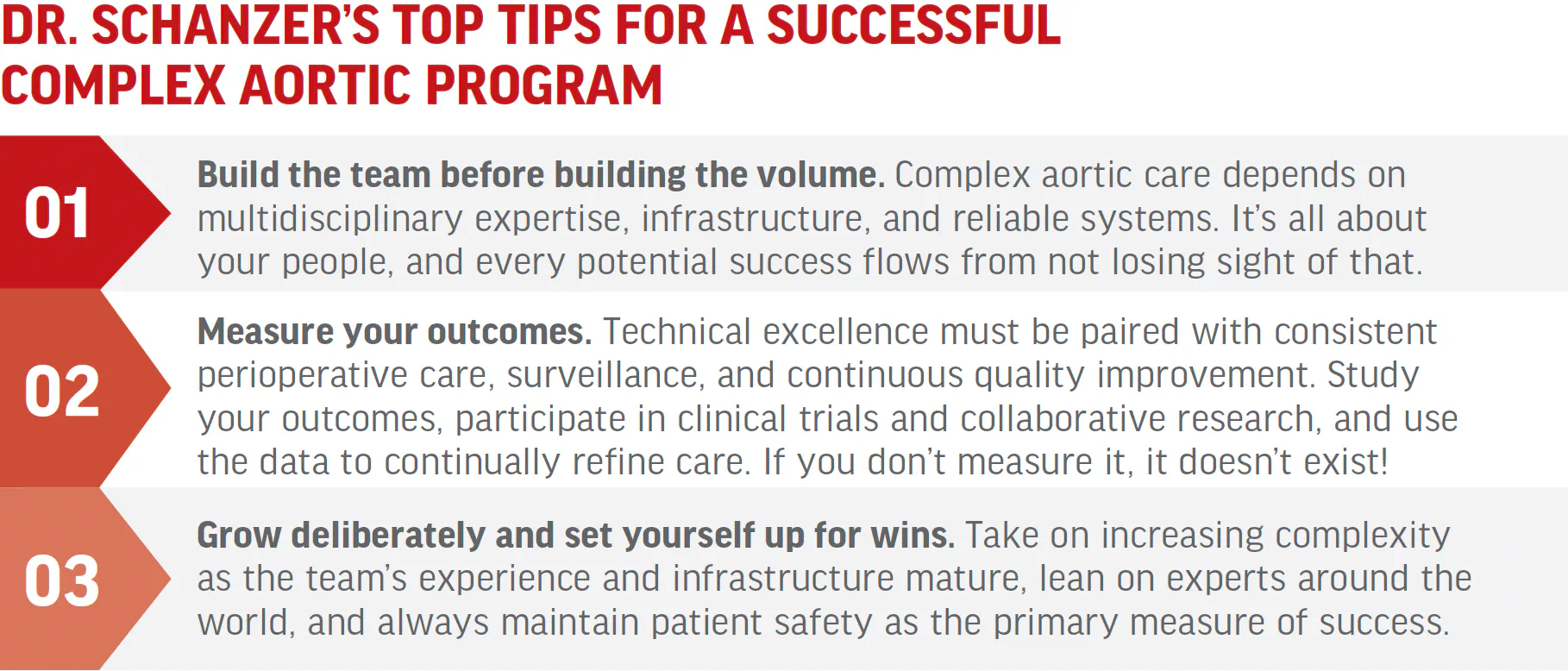
Our biggest current challenge is maintaining open TAAA repair skills. There simply aren’t enough being performed around the country to reliably pass down the skill set. Uber-specialization at a few regional centers will be necessary, as will postresidency/fellowship training and mentoring. And when I say a few centers, I believe it will be < 10. Open TAAA is not an operation that can be performed safely if you are only doing a few a year. If there has ever been a procedure requiring regionalization, this is the one!
We must continue to produce comprehensive vascular specialists who can adapt as technology changes rather than becoming defined by any single technology.
As President-Elect of the SVS, where do you see the biggest opportunities for growth in vascular surgery, and how can the Society help drive that progress?
I see tremendous opportunity for vascular surgery, but realizing it will require us to remain unified and deliberate about where we lead. Vascular surgeons are uniquely positioned as comprehensive specialists who can diagnose vascular disease, manage patients longitudinally, and offer medical, open surgical, and endovascular therapies. We need to make sure that patients, referring physicians, health systems, and policymakers understand that role.
SVS has several critical responsibilities. We must lead in defining what constitutes high-quality vascular care and develop the evidence and metrics to measure it. We must remain the premier source of education for vascular surgeons and other members of the vascular care team. We need to invest in young investigators so that vascular surgeons continue to generate and own the science that shapes our field. If we own the science, we will own the field. And we must advocate vigorously for sustainable reimbursement and practice environments that allow our members to deliver the full spectrum of vascular care.
We also need to work collaboratively with other specialties that care for patients with vascular disease. Vascular surgery is a relatively small specialty, and we won’t be successful going at it alone or in factions. Fragmentation weakens our ability to advocate for our patients and our profession. If we remain together, continue setting the standards for vascular care, and speak with a unified voice, I believe our opportunities are enormous.
What’s something you understand about working in the vascular field now that you wish you recognized earlier in your career?
Earlier in my career, I placed too much emphasis on what I could accomplish personally. With experience, I have come to appreciate that the most meaningful and durable accomplishments are always the product of teams. I derive my most professional satisfaction from seeing those around me enjoy success, and I strive to elevate others.
I still love to operate and take care of patients, and that is not changing any time soon. A technically successful operation is so gratifying, but building a program that allows hundreds or thousands of patients to receive excellent care has a much broader impact. The same is true in research and education. Mentoring someone who goes on to become an outstanding surgeon or investigator, building a research collaboration that answers questions no individual center could answer, or creating a clinical system that continues to improve after you are no longer directly involved is ultimately so much more consequential than any individual accomplishment.
I have come to recognize that the greatest multiplier of my effort is working incredibly hard to help talented people around me succeed.
Advertisement
Advertisement
Interested in reading more interviews?
To read more interviews with thought leaders in the vascular field, check out our Profiles & Perspectives hub.
Read More