Advertisement
Advertisement
September 2026
Sponsored by Medtronic
Lower Profile, Longer Reach: The 018 XL DCB Platform for Complex Femoropopliteal Lesions

Drug-coated balloon (DCB) angioplasty has emerged as a cornerstone of endovascular therapy for symptomatic femoropopliteal peripheral artery disease, offering antiproliferative drug delivery without the long-term consequences of a permanent metallic implant. In randomized controlled trials, paclitaxel-coated balloons have consistently demonstrated superior patency and reduced rates of restenosis and reintervention compared with standard percutaneous transluminal angioplasty (PTA).1-4 Complementary large-scale, prospective registries have further confirmed the safety and effectiveness of DCB therapy across a broad spectrum of real-world femoropopliteal lesions.4-10
Despite these advances, contemporary practice increasingly involves patients and lesions of greater complexity than those enrolled in pivotal trials, including long-segment disease, chronic total occlusions (CTOs), restenotic and in-stent restenotic lesions, and bulky moderate-to-severe calcification. Such anatomic hurdles routinely compromise device deliverability, increase procedural difficulty, challenge procedural success, and limit the durability of endovascular treatment. Data from the IN.PACT Global study imaging cohorts confirm sustained positive outcomes with DCB therapy even in these difficult subsets, with 12-month primary patency of 91.1% in long lesions7 and 85.3% in CTOs,8 as well as 5-year freedom from clinically driven target lesion revascularization (CD-TLR) of 67.3% and 69.8% in long lesions and CTOs, respectively.10
However, provisional stent rates remain substantial in these cohorts when treated with primary DCB therapy (39.1% in long lesions and 46.5% in CTOs),10 highlighting the importance of adequate vessel preparation prior to DCB use. Supporting this concept, the DEFINITIVE AR trial demonstrated that directional atherectomy before DCB angioplasty improved acute technical success (89.6% vs 64.2%) and markedly reduced flow-limiting dissections (2.1% vs 18.5%) compared with DCB alone.11 The VIVA REALITY study further reinforced this approach in long, severely calcified femoropopliteal lesions, reporting a provisional stent rate of only 8.8%, 12-month primary patency of 76.7%, and 12-month freedom from CD-TLR of 92.6% after directional atherectomy followed by DCB.12
More recent iterations of DCB technology have moved to a 0.018-inch platform designed to provide a lower profile compared to its previous 0.035-inch counterpart, allowing for ease of procedural setup, minimized guidewire exchanges, reduced procedural time, and lower radiation and contrast exposure. The IN.PACT™ 018 paclitaxel-coated PTA balloon catheter (Medtronic) optimizes for these practical needs and is indicated after appropriate vessel preparation for de novo, restenotic, or in-stent restenotic lesions up to 360 mm in length in the superficial femoral (SFA) or popliteal arteries (reference vessel diameters, 4-7 mm). Its 0.018-inch, over-the-wire platform provides a lower-profile system with enhanced crossability through residual stenoses or calcified segments while remaining compatible with commonly used 0.014- or 0.018-inch guidewires. Concurrently, the availability of extended balloon lengths (200 and 250 mm) permits treatment of long lesions with fewer inflations, thus decreasing the risk of geographic miss and improving overall procedural efficiency without compromising deliverability or the proven paclitaxel-urea drug formulation of the IN.PACT platform.
The following case illustrates the clinical rationale and practical considerations for employing the IN.PACT 018 XL DCB† in contemporary femoropopliteal intervention, with particular attention paid to the management of long and complex lesions, the critical role of vessel preparation, and the contribution of a dedicated 0.018-inch, extended-length DCB platform to efficient and effective drug delivery.
CASE PRESENTATION
Patient Presentation
A man in his mid-70s with a history of hypertension, hyperlipidemia, atrial fibrillation, chronic obstructive pulmonary disease, and heart failure with preserved ejection fraction presented with ischemic rest pain of the right foot and nonhealing ulceration of the right great toe (Figure 1). He was receiving guideline-directed medical therapy, including aspirin, clopidogrel, and atorvastatin. At 6 months before presentation, he underwent a left below-knee amputation for ischemic wounds and continued to rely on his right leg for transfers, although his mobility was limited by right foot symptoms. Noninvasive testing demonstrated severe ischemia, with a right ankle-brachial index of 0.49 and toe pressure of 0 mm Hg. Diagnostic angiography demonstrated a patent distal aorta with severe stenosis in the right common and external iliac arteries. The right common femoral artery was widely patent, and the origin of the profunda femoris artery had minimal disease (Figure 2A). The SFA was patent proximally but had a 23-cm CTO in the mid and distal segments, with reconstitution of the P1 popliteal artery and severe stenosis of the P2 popliteal segment (Figure 2A and 2B). Three-vessel tibial runoff was present, with mild-to-moderate tibial occlusive disease (Figure 2B).
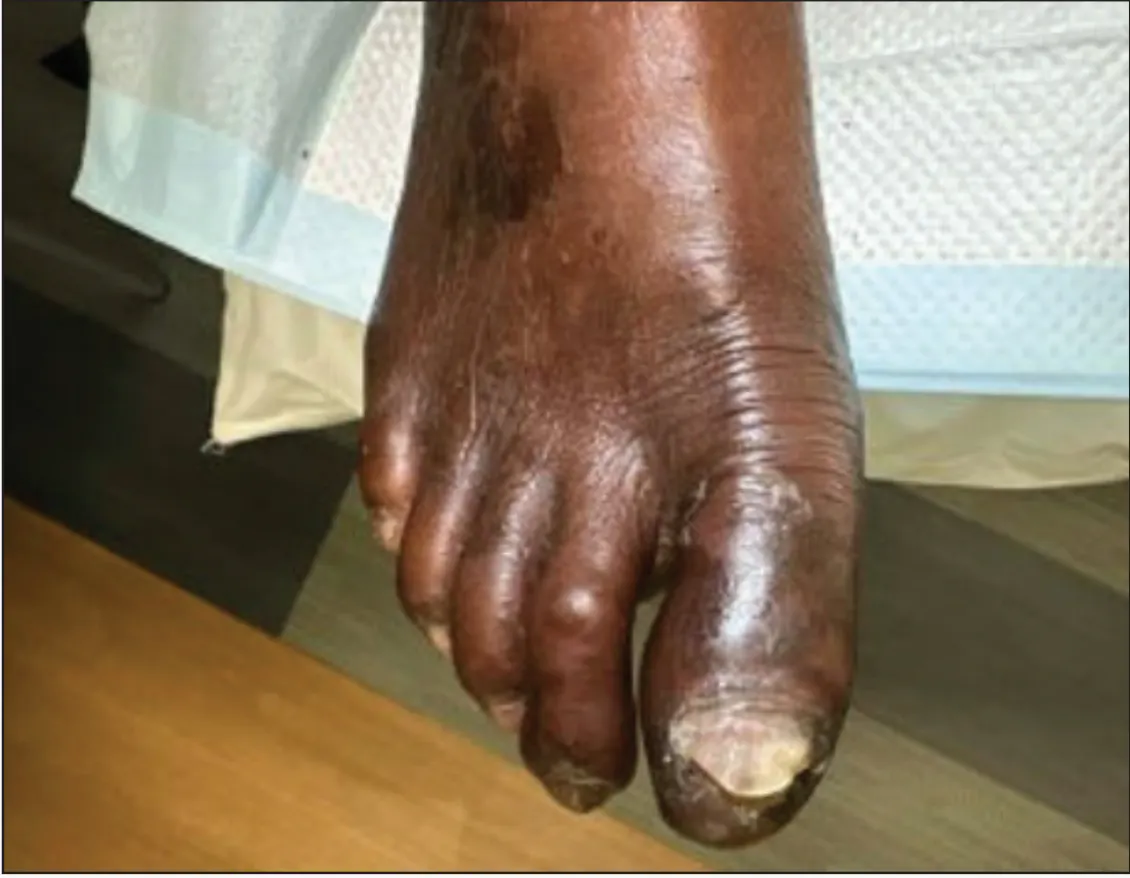
Figure 1. A patient presenting with CLTI and nonhealing ulceration of the right great toe.
Procedural Overview
Given the patient’s chronic limb-threatening ischemia (CLTI), comorbidities, and extensive femoropopliteal disease characterized by mixed-morphology plaque with moderate calcification, endovascular revascularization with directional atherectomy for vessel preparation followed by DCB angioplasty was selected. A 7-mm SpiderFX™ distal embolic protection filter (Medtronic) was first placed in the distal popliteal artery, followed by directional atherectomy with the HawkOne™ LX directional atherectomy system (Medtronic) in the SFA and popliteal artery (Figure 2C-2E). Directional atherectomy was performed to first achieve < 30% residual stenosis and adequate vessel preparation; DCB angioplasty was then executed using 6- X 250-mm and 6- X 200-mm IN.PACT 018 XL to treat the long femoropopliteal segment with antirestenotic therapy (Figure 2F and 2G).
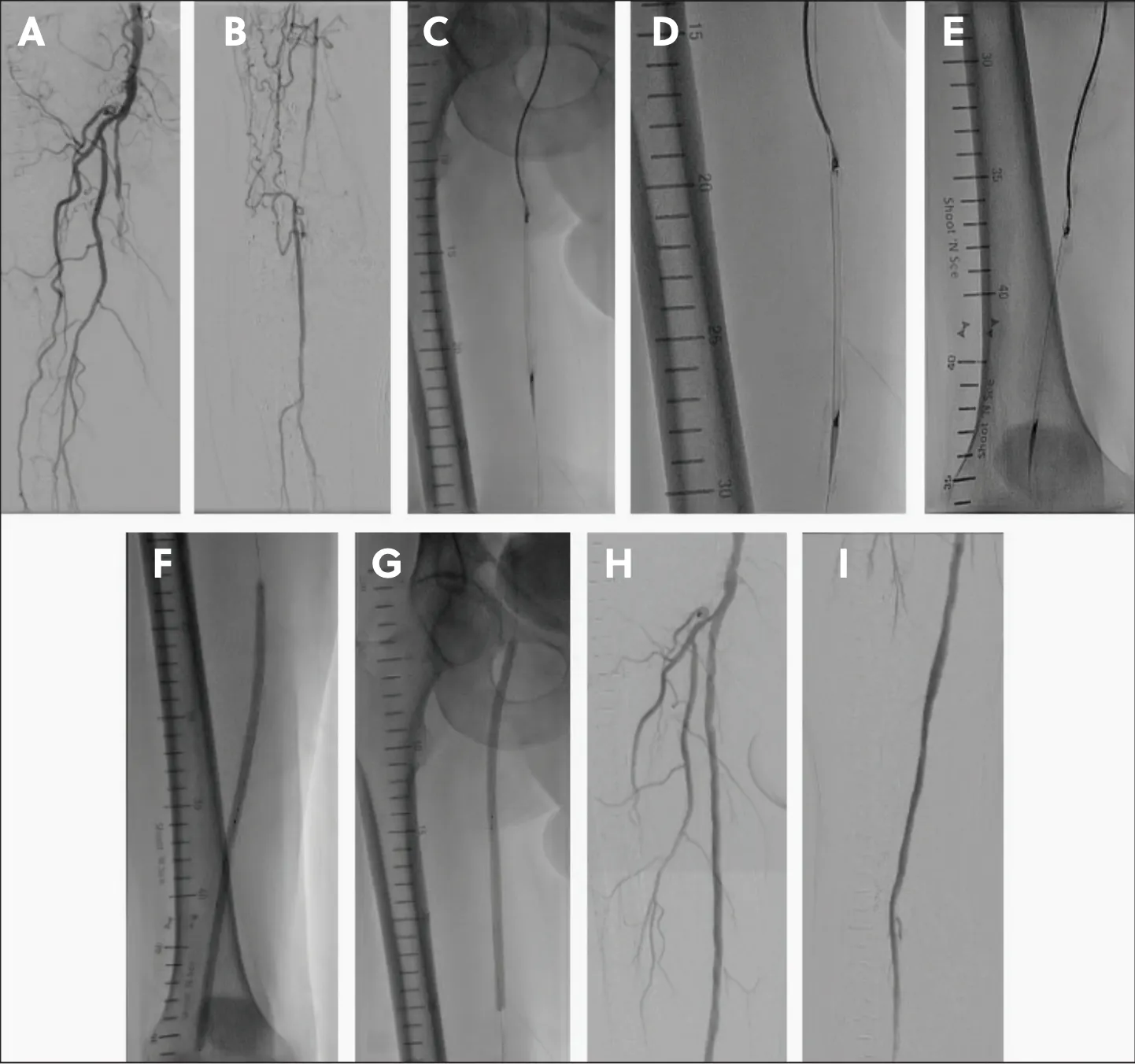
Figure 2. Angiographic and procedural images from treatment of a CLTI patient. Baseline angiography demonstrates a patent common femoral artery and profunda femoris artery, proximal SFA patency, a long CTO of the SFA with reconstitution of the P1 popliteal artery, severe P2 stenosis, and three-vessel tibial runoff with mild-to-moderate tibial occlusive disease (A, B). SFA and popliteal atherectomy with the HawkOne LX device after placement of a 7-mm SpiderFX distal embolic protection filter in the distal popliteal artery (C-E). DCB angioplasty after atherectomy using 6- X 250-mm and 6- X 200-mm IN.PACT 018 XL DCBs to treat the long femoropopliteal segment (F, G). Completion angiography demonstrating successful recanalization of the SFA and popliteal segment with < 30% residual stenosis and no flow-limiting dissection (H, I).
Procedural Results
Completion angiography demonstrated successful recanalization of the SFA and popliteal segment, with an acceptable technical result and no flow-limiting dissection (Figure 2H and 2I). During the same procedure, the patient also underwent successful angioplasty and stenting of severe stenoses in the right common iliac and external iliac arteries. The patient had multiphasic Doppler signal in the right pedal arteries and plantar arch, with resolution of rest pain at the completion of the procedure.
DISCUSSION AND CONCLUSIONS
This case illustrates the use of atherectomy followed by DCB angioplasty for a complex long-segment femoropopliteal lesion in a patient with CLTI. Multiple strategies can be pursued in this setting, including primary DCB angioplasty. For long, complex CTO, I have found crossing success by starting with a combination of a 0.018-inch, nitinol-tipped wire and a straight, 0.035-inch support catheter, with occasional escalation to an 0.018-inch support catheter or a 0.014-inch wire. With this crossing strategy, after reentry is achieved, the setup is well positioned to move directly to a 0.018-inch platform DCB while maintaining a 5-F sheath size. The IN.PACT 018 XL offers a compelling combination of proven antiproliferative effectiveness on a lower-profile platform, without meaningful loss of pushability or trackability over either 0.014- or 0.018-inch wires.
Based on several studies, the evidence is clear that an approach utilizing directional atherectomy and IN.PACT™ Admiral™ drug-coated balloon (Medtronic) is likely to result in increased procedural success, lower rates of bailout stenting, and longer primary patency compared to DCB angioplasty alone.11-13 Debulking as a form of vessel preparation plays an important role in this treatment pathway; the more volume of atheroma removed, the less residual tissue present for stenosis or dissection, with the added benefit of facilitating DCB deliverability. In addition, the use of the 200- and 250-mm-length balloons was a significant advantage in this procedure, promoting procedural efficiency (two 3-minute inflations) and lesion coverage, and minimizing the risk of geographic miss.
With the surge of available vessel preparation strategies for use prior to drug delivery in routine femoropopliteal practice comes increased emphasis on device deliverability and procedural efficiency. In complex disease, it is commonplace to be working over a 0.014-inch platform to accommodate various specialty balloons, intravascular lithotripsy, atherectomy devices, or a distal embolic filter. Particularly in long lesions and heavily calcified lesions, the imperfect interaction between a standard 0.035-inch drug delivery balloon catheter and a 0.014-inch wire can prove to be a hindrance even after significant vessel preparation work is completed. Moreover, the overall lower profile of the IN.PACT 018 DCB platform, engineered specifically for peripheral use, tracks and delivers better across complex lesions. This low profile and the availability of longer working-length catheters also opens the possibility of radial or alternative access when needed.
The IN.PACT 018 DCB platform is a logical and much needed expansion of the proven DCB technology. The 200- and 250-mm XL balloons have been skillfully engineered to perform at a familiar high level to streamline case cadence. Collectively, the benefits of the 018 platform enable continued reliable drug delivery in anatomically challenging cases while preserving the “leave nothing behind” advantage of a thoroughly validated technology.
†XL refers to the 200 mm and 250 mm length balloons.
1. Tepe G, Laird J, Schneider P, et al. Drug-coated balloon versus standard percutaneous transluminal angioplasty for the treatment of superficial femoral and popliteal peripheral artery disease: 12-month results from the IN.PACT SFA randomized trial. Circulation. 2015;131:495-502. doi: 10.1161/CIRCULATIONAHA.114.011004
2. Rosenfield K, Jaff MR, White CJ, et al. Trial of a paclitaxel-coated balloon for femoropopliteal artery disease. N Engl J Med. 2015;373:145-153. doi: 10.1056/NEJMoa1406235
3. Krishnan P, Faries P, Niazi K, et al. Stellarex drug-coated balloon for treatment of femoropopliteal disease: twelve-month outcomes from the randomized ILLUMENATE pivotal and pharmacokinetic studies. Circulation. 2017;136:1102-13. doi: 10.1161/CIRCULATIONAHA.117.028893
4. Laird JR, Schneider PA, Tepe G, et al. Durability of treatment effect using a drug-coated balloon for femoropopliteal lesions: 24-month results of IN.PACT SFA. J Am Coll Cardiol. 2015;66:2329-2338. doi: 10.1016/j.jacc.2015.09.063
5. Micari A, Nerla R, Vadala G, et al. 2-Year results of paclitaxel-coated balloons for long femoropopliteal artery disease: evidence from the SFA-Long study. JACC Cardiovasc Interv. 2017;10:728-734. doi: 10.1016/j.jcin.2017.01.028
6. Micari A, Brodmann M, Keirse K, et al. Drug-coated balloon treatment of femoropopliteal lesions for patients with intermittent claudication and ischemic rest pain: 2-year results from the IN.PACT Global study. JACC Cardiovasc Interv. 2018;11:945-953. doi: 10.1016/j.jcin.2018.02.019.
7. Scheinert D, Micari A, Brodmann M, et al. Drug-coated balloon treatment for femoropopliteal artery disease: the IN.PACT Global study long lesion imaging cohort. Circ Cardiovasc Interv. 2018;11:e005654. doi: 10.1161/CIRCINTERVENTIONS.117.005654
8. Tepe G, Micari A, Keirse K, et al. Drug-coated balloon treatment for femoropopliteal artery disease: the chronic total occlusion cohort in the IN.PACT Global study. JACC Cardiovasc Interv. 2019;12:484-493. doi: 10.1016/j.jcin.2018.12.004
9. Zeller T, Brodmann M, Ansel GM, et al. Paclitaxel-coated balloons for femoropopliteal peripheral arterial disease: final five-year results of the IN.PACT Global study. EuroIntervention. 2022;18:e940-e948. doi: 10.4244/EIJ-D-21-01098.
10. Tepe G, Brodmann M, Micari A, et al. 5-year outcomes of drug-coated balloons for peripheral artery in-stent restenosis, long lesions, and CTOs. JACC Cardiovasc Interv. 2023;16:1065-1078. doi: 10.1016/j.jcin.2023.03.032
11. Zeller T, Langhoff R, Rocha-Singh KJ, et al. Directional atherectomy followed by a paclitaxel-coated balloon to inhibit restenosis and maintain vessel patency: twelve-month results of the DEFINITIVE AR study. Circ Cardiovasc Interv. 2017;10:e004848. doi: 10.1161/CIRCINTERVENTIONS.116.004848
12. Rocha-Singh KJ, Sachar R, DeRubertis BG, et al. Directional atherectomy before paclitaxel coated balloon angioplasty in complex femoropopliteal disease: the VIVA REALITY study. Catheter Cardiovasc Interv. 2021;98:549-558. doi: 10.1002/ccd.29777
13. Stavroulakis K, Schwindt A, Torsello G, et al. directional atherectomy with antirestenotic therapy vs drug-coated balloon angioplasty alone for isolated popliteal artery lesions. J Endovasc Ther. 2017;24:181-188. doi: 10.1177/1526602816683933
Disclosures
Dr. Stanley: Consultant to Medtronic.
This material should not be considered the exclusive source of information, it does not replace or supersede information contained in the device manual(s). Please note that the intended use of a product may vary depending on geographical approvals. See the device manual(s) for detailed information regarding the intended use, the procedure, indications, contraindications, warnings, precautions, and potential adverse events. Medtronic products placed on markets comply with legislation (if applicable) on medical devices.
If you are located in the United States, please refer to the brief statement(s) below to review applicable indications, safety and warning information. If you are located outside the United States, see the device manual for detailed information. For further information, contact your local Medtronic representative and/or consult the Medtronic website at www.medtronic.com.
IN.PACT™ Admiral™ and IN.PACT™ 018 paclitaxel-coated PTA catheter Brief Statement (combined)
Indications for Use
The IN.PACT Admiral™/IN.PACT™ 018 paclitaxel-coated PTA balloon catheter is indicated for percutaneous transluminal angioplasty, after appropriate vessel preparation, of de novo, restenotic, or in-stent restenotic lesions with lengths up to 360 mm in superficial femoral or popliteal arteries with reference vessel diameters of 4-7 mm.
Contraindications
The IN.PACT Admiral™/IN.PACT™ 018 DCB is contraindicated for use in:
- Coronary arteries, renal arteries, and supra-aortic/cerebrovascular arteries
- Patients who cannot receive recommended antiplatelet and/or anticoagulant therapy
- Patients judged to have a lesion that prevents complete inflation of an angioplasty balloon or proper placement of the delivery system
- Patients with known allergies or sensitivities to paclitaxel
- Women who are breastfeeding, pregnant, or are intending to become pregnant, or men intending to father children. It is unknown whether paclitaxel will be excreted in human milk and whether there is a potential for adverse reaction in nursing infants from paclitaxel exposure.
Warnings
- Do not use air or any gaseous medium to inflate the balloon. Use only the recommended inflation medium (equal parts contrast medium and saline solution).
- Do not move the guidewire during inflation of the drug coated balloon.
- Do not exceed the rated burst pressure (RBP). The RBP is based on the results of in vitro testing. Use of pressures higher than RBP may result in a ruptured balloon with possible intimal damage and dissection.
- The safety and effectiveness of using multiple IN.PACT Admiral™/IN.PACT™ 018 DCBs with a total drug dosage exceeding 34,854 µg of paclitaxel in a patient has not been clinically evaluated.
Precautions
- Assess risks and benefits before treating patients with a history of severe reaction to contrast agents.
- Administer appropriate drug therapy to the patient according to standard protocols for PTA before insertion of the dilatation catheter.
- Take precautions to prevent or reduce clotting when any catheter is used. Flush and rinse all products entering the vascular system with heparinized normal saline or a similar solution. For the DCB catheter, flush the guidewire lumen through the guidewire port with heparinized normal saline until the fluid exits the distal tip. Do not rinse or wipe the DCB catheter.
- Identify allergic reactions to contrast media and antiplatelet therapy before treatment and consider alternatives for appropriate management prior to the procedure.
- This product is not intended for the expansion or delivery of a stent.
- This product is not intended for pre-dilation or post-dilatation.
- Do not expose the product to organic solvents such as alcohol.
- To reduce the potential for vessel damage, the inflated diameter of the balloon should approximately match the diameter of the vessel just distal to the lesion.
Potential Adverse Events
The potential adverse events associated with use of the device include but are not limited to: Abrupt vessel closure, access site pain, allergic reaction to contrast medium, antiplatelet therapy, or catheter system components (materials, drugs, and excipients), amputation/loss of limb, arrhythmias, arterial aneurysm, arterial thrombosis, arteriovenous (AV) fistula, death, dissection, embolization, fever, hematoma, hemorrhage, hypotension/hypertension, inflammation, ischemia or infarction of tissue/organ, local infection at access site, local or distal embolic events, perforation or rupture of the artery, pseudoaneurysm, renal insufficiency or failure, restenosis of the dilated artery, sepsis or systemic infection, shock, stroke, systemic embolization, vessel spasms or recoil, and vessel trauma which requires surgical repair.
Potential adverse events not captured above that may be unique to the paclitaxel drug coating include, but are not limited to: allergic/immunologic reaction, alopecia, anemia, gastrointestinal symptoms, hematologic dyscrasia (including leucopenia, neutropenia, thrombocytopenia), hepatic enzyme changes, histologic changes in vessel wall, including inflammation, cellular damage, or necrosis, myalgia/arthralgia, myelosuppression, and peripheral neuropathy. Refer to the Physician’s Desk Reference for more information on the potential adverse effects observed with paclitaxel.
CAUTION: Federal (USA) law restricts this device to sale by or on the order of a physician.
Important information: Indications, contraindications, warnings and instructions for use can be found in the product labeling supplied with each device, at www.medtronic.com/manuals or contact a Medtronic representative.
HawkOne™ directional atherectomy system
Reference Statement
Indications for Use
The HawkOne™ directional atherectomy system is intended for use in atherectomy of the peripheral vasculature. The HawkOne™ catheter is indicated for use in conjunction with the SpiderFX™ embolic protection device in the treatment of severely calcified lesions. The HawkOne™ catheter is NOT intended for use in the coronary, carotid, iliac, or renal vasculature.
Contraindications
Do not use in the coronary arteries, carotid artery, or in the iliac, or renal vasculature.
Do not use for in-stent restenosis at the peripheral vascular site.
Potential Adverse Events
The potential complications include, but are not limited to the following: Amputation, aneurysm, arterial dissection, arterial perforation, arterial rupture, arterial spasm, arteriovenous fistula, bleeding complications, death, embolism or arterial thrombosis, emergency or non-emergency arterial bypass surgery, entry site complications, hypotension, infection, ischemia, restenosis of the treated segment, total occlusion of the peripheral artery, and vascular complications that could require surgical repair.
CAUTION: Federal (USA) law restricts this device to sale by or on the order of a physician.
Important information: Indications, contraindications, warnings and instructions for use can be found in the product labeling supplied with each device, at www.medtronic.com/manuals or contact a Medtronic representative.
SpiderFX™ embolic protection device
Reference Statement
Indications for Use
Lower Extremity (LE) Interventions
The SpiderFX™ Embolic Protection Device is indicated for use as a guidewire and embolic protection system to contain and remove embolic material in conjunction with the TurboHawk™ Peripheral Plaque Excision System, either during standalone procedures or together with PTA and/or stenting, in the treatment of severely calcified lesions in arteries of the lower extremities. The vessel diameter at the filter basket placement site should be between 3.0 mm and 6.0 mm.
Carotid Interventions
The SpiderFX™ Embolic Protection Device is indicated for use as a guidewire and embolic protection system to contain and remove embolic material (thrombus/debris) while performing angioplasty and stenting procedures in carotid arteries. The diameter of the artery at the site of filter basket placement should be between 3.0mm and 7.0mm.
Saphenous Vein Graft (SVG) Interventions
The SpiderFX™ Embolic Protection Device is indicated for use as an embolic protection system to contain and remove embolic material (thrombus/debris). The device also acts as the guidewire while performing percutaneous transluminal coronary angioplasty or stenting procedures in coronary saphenous vein bypass grafts with reference vessel diameters of 3.0mm to 6.0mm. The safety and effectiveness of this device as an embolic protection system has not been established in the cerebral vasculature.
Contraindications
Do not use with patients in whom anticoagulant and antiplatelet therapy is contraindicated; Do not use in vessels with excessive tortuosity; Do not use in patients with uncorrected bleeding disorders; Do not use in the renal arteries.
Potential Adverse Events
The potential complications include, but are not limited to the following: Access site adverse event (e.g., av fistula, hematoma, hemorrhage, pseudoaneurysm, puncture site infection); Adjunct device entanglement (LE only); Adverse reaction to antiplatelet/anticoagulation agents or contrast media; Allergic reaction to device materials; Amaurosis Fugax (carotid only); Amputation (LE only); Aneurysm (LE and SVG); Angina (carotid and SVG only); Arterial dissection; Cerebral hemorrhage (Carotid only); Congestive heart failure (carotid only); Cardiac tamponade (SVG only); Coronary ischemia (SVG only); Death; Device(s) deformation, collapse, fracture, or rupture; Device(s) thrombosis (acute and subacute); Dissection (LE and carotid only); Embolization of air, debris, plaque or thrombus (evidenced by slow or no-flow) from mechanical disruption by the intervention resulting in TIA or stroke; Embolization or migration of the interventional device(s); Emergency surgery; Failure to deliver stent to the intended site (SVG only); GI bleeding due to anticoagulation (LE and carotid only); Hemodynamic compromise (e.g., prolonged hypotension requiring treatment with intravenous medications) (LE and carotid only); Hyperperfusion syndrome (carotid only); Hypotension or hypertension; Infection; Intimal flap (SVG only); Intracerebral bleed (carotid only); Ischemia (LE and SVG only); Myocardial infarction; Occlusion (SVG only); Renal insufficiency (LE and carotid only); Renal failure requiring dialysis; Repeat intervention to treatment site (LE only); Restenosis of stented segment (greater than 50% obstruction) (SVG only); Seizure (carotid only); Sepsis; Significant cardiac arrhythmia requiring treatment with medications and/or transvenous pacing; Stent entanglement; Stroke (LE and carotid only); Thrombosis (acute and subacute); Transient Ischemia Attack (TIA) (LE and carotid only); Vasospasm; Vessel dissection, perforation, rupture or intimal flap; Vessel/filter occlusion
CAUTION: Federal (USA) law restricts this device to sale by or on the order of a physician.
Important information: Indications, contraindications, warnings and instructions for use can be found in the product labeling supplied with each device, at www.medtronic.com/manuals or contact a Medtronic representative
US-CV-2602031 ©2026 Medtronic. Medtronic, Medtronic logo are trademarks of Medtronic.
All other brands are trademarks of Medtronic. For global distribution. 09/2026
Advertisement
Advertisement
