Advertisement
Advertisement
April 19, 2024
The VIVA Foundation Convenes Vascular Leaders Forum on CLTI
Aiming to explore the state of care for patients with chronic limb-threatening ischemia (CLTI), current clinical trial methodologies, and nuances of regulatory pathways in the United States, The VIVA Foundation convened a Vascular Leaders Forum (VLF) on April 12, 2024, in Washington, DC, with Dr. Eric Secemsky serving as chairperson. VLF sessions bring together experts and key stakeholders from a variety of backgrounds to focus on a singular topic, with an eye toward collaboratively addressing issues big and small. Recent sessions have covered deep venous disease practices (2022) and paclitaxel safety (2019).
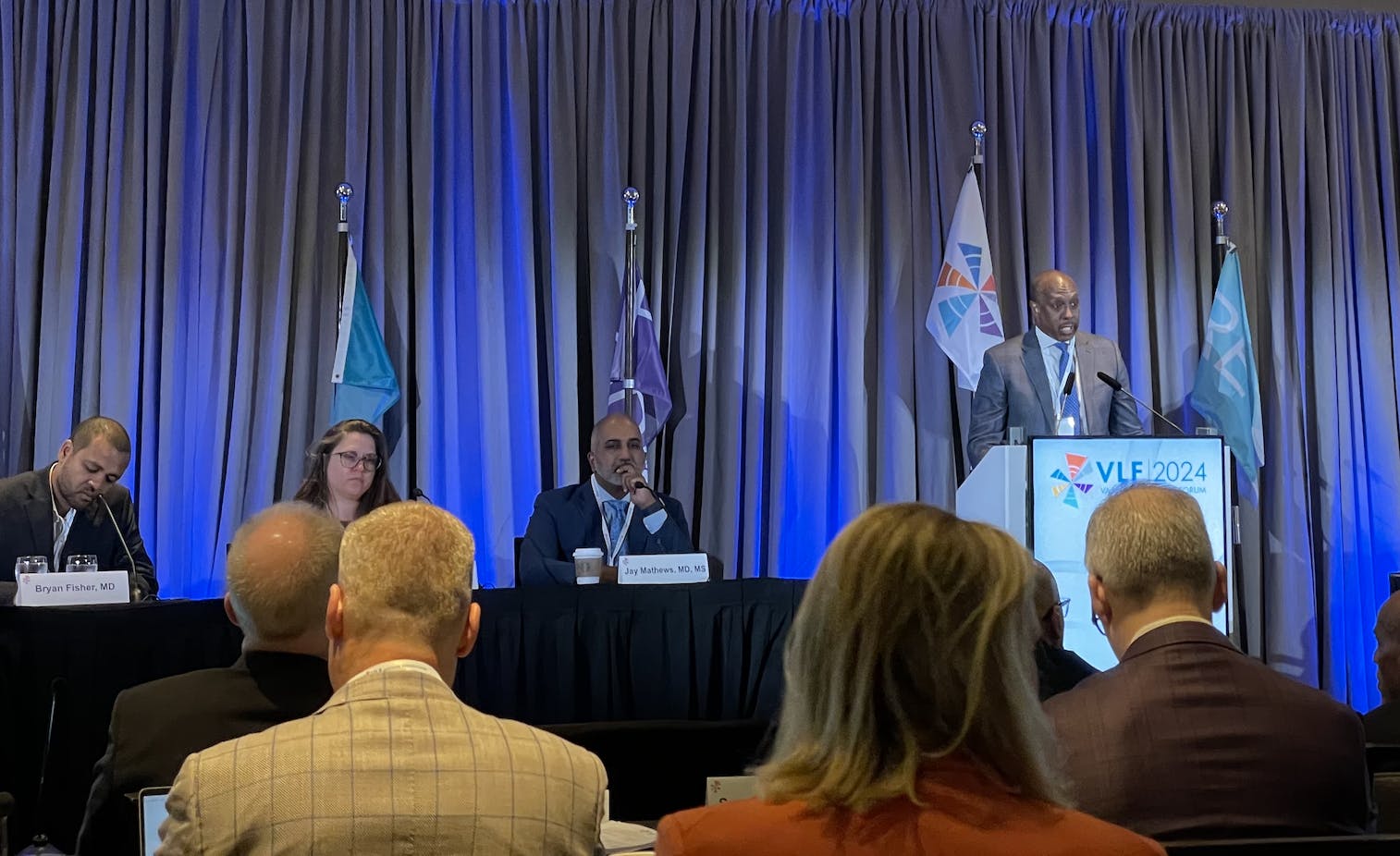 In this year’s VLF, representatives from across the specialties treating peripheral vascular disease, industry, the FDA, and patient advocates were invited to share in-depth talks and panel discussions throughout the full-day program.
The sessions began with a detailed look at critical issues affecting contemporary CLTI care delivery, including disparities throughout the care continuum, recent negative press, and patient education and perceptions of vascular care.
Several talks highlighted the challenges of studying and understanding disparities in access and outcomes due to their multifactorial causes. Increased awareness of biases and social determinants of health and care delivery by purpose-driven multidisciplinary teams are steps in the right direction to bring about better results for all patients, including historically underserved populations.
Throughout the day, sessions addressed the effects of negative press in lay outlets over the past year. For example, the son of a patient treated for CLTI described the difficulties his family faced navigating the health care and payment systems, as well as the family’s uncertainty over how to proceed upon reading a critical front-page The New York Times article midway through his father’s journey. A patient advocate also shared insights from a community of people with peripheral artery disease (PAD). These included long delays before obtaining a proper diagnosis, increasing insurance denials, the desire to not have their pain dismissed, and the need for more education regarding their disease and potential options.
REGULATORY AND CLINICAL STUDY CONSIDERATIONS
The VLF organizers invited colleagues from the FDA to participate as presenters as well as panelists, offering candid insights into the various device pathways to market. FDA, physician investigators, and industry representatives detailed the unique challenges inherent in clinical studies of the CLTI population, including advanced disease progression (often at time of first diagnosis), symptom and severity heterogeneity, data ascertainment hurdles, inclusion/exclusion criteria versus real-world populations (eg, exclusion of patients with end-stage renal disease), isolation of single therapies when several are often used (eg, vessel prep plus primary therapy), and the overall lack of public and referrer awareness of PAD.
Applications and limitations of the 510(k) clearance pathway, decidedly faster and requiring significantly less extensive study and data than its premarket approval counterpart, were focal throughout the proceedings. Panelists weighed the relative lack of data for devices frequently used in CLTI that reached market via 510(k), in particular, atherectomy, as well as the scarcity of head-to-head comparative data for most devices regardless of their regulatory pathway.
Funding and sponsorship for nonmandatory postapproval studies can be an obstacle-laden process, often leading to limited data generation once a product is on the market, especially if reimbursement is in place. Real-world registries can address some key questions but have limitations, as do other study models.
The panel also extensively discussed the evolution of understanding which outcomes are most important and how best to gather them; consensus in this arena remains elusive. Investigators from several of the field’s recent trials probed their designs, endpoints, and imaging standard for a better understanding of their relative comparability. Trialists posed questions to FDA on which endpoints are most meaningful from a regulatory standpoint, then volleyed queries to one another regarding which were most clinically relevant and valued by patients. Opinions on how best to determine procedural success and outcome achievement varied, with the relative applicability of ultrasound, intravascular ultrasound, and angiography each explored in dedicated talks.
Recent clinical trials have shown the importance of ensuring optimal medical management to the success of any revascularization procedure and the difficulties in doing so. Improvements in adherence are essential, with operators and referrers needing to educate patients on the importance of compliance.
REIMBURSEMENT AND SITES OF SERVICE
Reimbursement and the overall procedural payment landscape in the United States were featured heavily throughout the VLF proceedings. The optimal sites of care, from office-based labs (OBLs) and ambulatory surgical centers to in-hospital settings, and the variations in payment models for each were discussed and debated. Care in outpatient settings has been increasingly scrutinized in medical circles and the lay media, in part due to concerns regarding reimbursement incentive and their overall less regulated settings. However, it was also proposed that procedure volume can follow payment structure regardless of setting and happens throughout medicine, and that overall, reimbursements have recently declined, creating unique pressures in each practice type.
The merits of OBL-based care, including easier access for patients and potentially improved physician well-being, were also discussed at length. Most attendees largely agreed on each setting having utility and especially on the need for ensuring patients’ access to high-quality, appropriate care, regardless of the provider’s location or specialty. Participation in registries such as those offered via the Vascular Quality Initiative and Outpatient Endovascular and Interventional Society, among others, were highlighted as opportunities to both ensure quality and appropriateness while also continuing to collect data from real-world settings. However, costs and staffing/administrative hurdles were acknowledged.
COLLABORATIVE SOLUTIONS NEEDED
Many of the issues facing CLTI care delivery appear unlikely to be resolved soon. Although rooted in larger societal and health care system issues, VLF participants believed that any potential solutions will nonetheless need to start at the local level, driven by specialties and parties represented in the room.
The overall lack of understanding on risk factors among patients and providers—specifically referrers who may not be screening for PAD at all—contributes to progression to advanced CLTI, often before the first diagnosis is made, at which point treatment options are decidedly more limited. Creating more public and provider awareness was cited as a clear need to improve care patterns amidst the inverse curves of a growing CLTI patient population and shrinking pool of providers. Workforce challenges such as physician/staff shortages and “vascular deserts” in which revascularization specialists are limited in number—or not present at all—pose significant hurdles to patient access and care delivery.
Against this backdrop, continued turf battles were cited by some participants as being counterproductive.
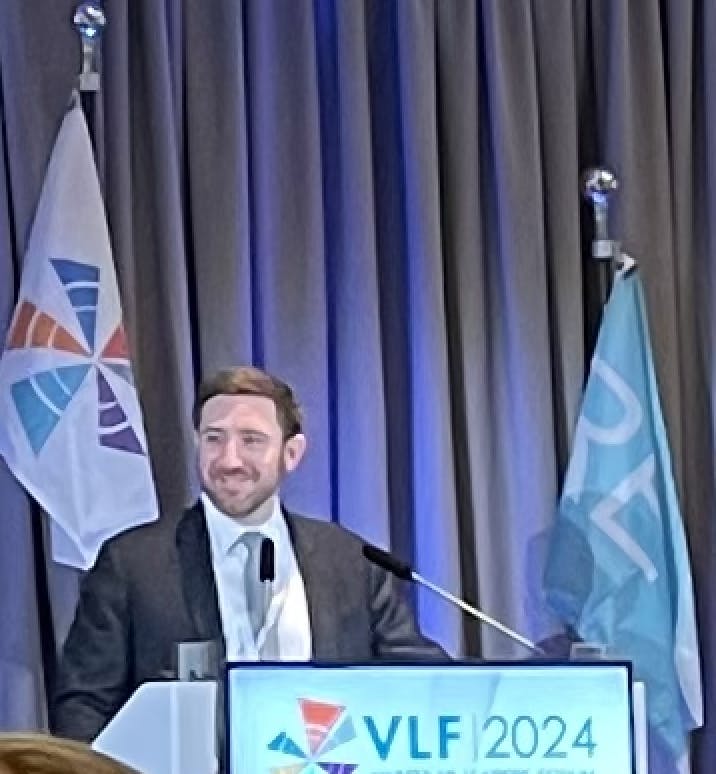 Dr. Secemsky told Endovascular Today that one of the primary goals of the session was to raise camaraderie and awareness of the multispecialty nature of care required for patients with CLTI. In his opening comments to the group, he acknowledged that CLTI may be the most challenging condition he encounters in his practice. As detailed throughout the session, the issues adversely affecting patient care start with awareness and access and continue through wound care and follow-up, with great discrepancy and debate as to the procedures performed in between.
A prevailing sentiment was that although each specialty may have unique abilities and each individual physician has their own strengths and skills, CLTI patient care requires long-term multidisciplinary effort that well exceeds the revascularization itself. “It’s important to recognize each of the different roles that the specialties play. We have a lot of overlap, but we also have differences we bring to the space that are critically important,” said Dr. Secemsky, who is a member of The VIVA Foundation Board of Directors. “We’re trying to break down the walls and understand each other’s viewpoints, to harmonize and identify pathways to move forward as a multispecialty group. VIVA and the Vascular Leaders Forum are founded on the principle of multispecialty, collaborative care.”
The VIVA Foundation, FDA, and VLF participants will continue the conversation in the coming months, with official publications and action plans to follow.
Advertisement
Advertisement
